



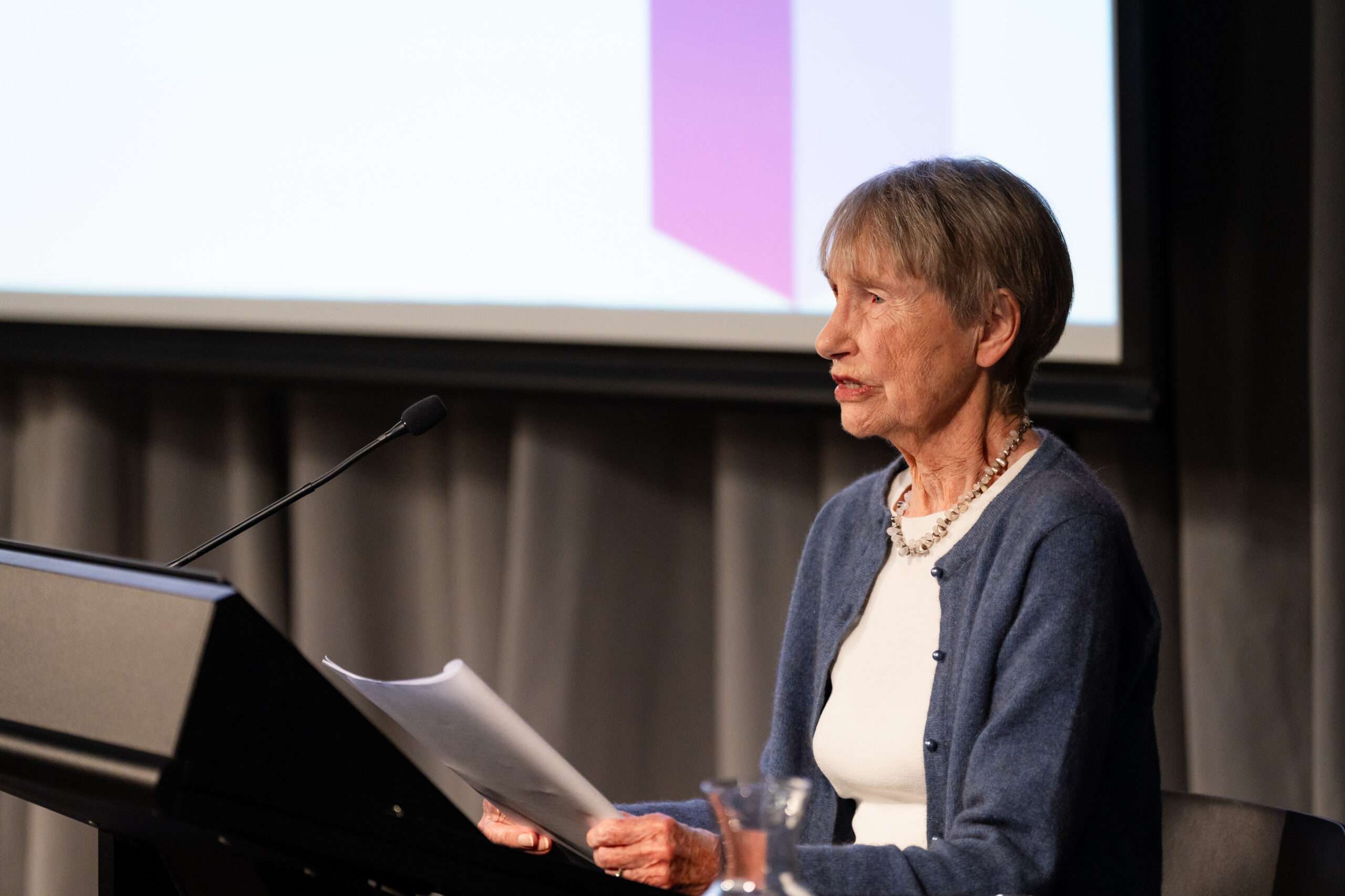
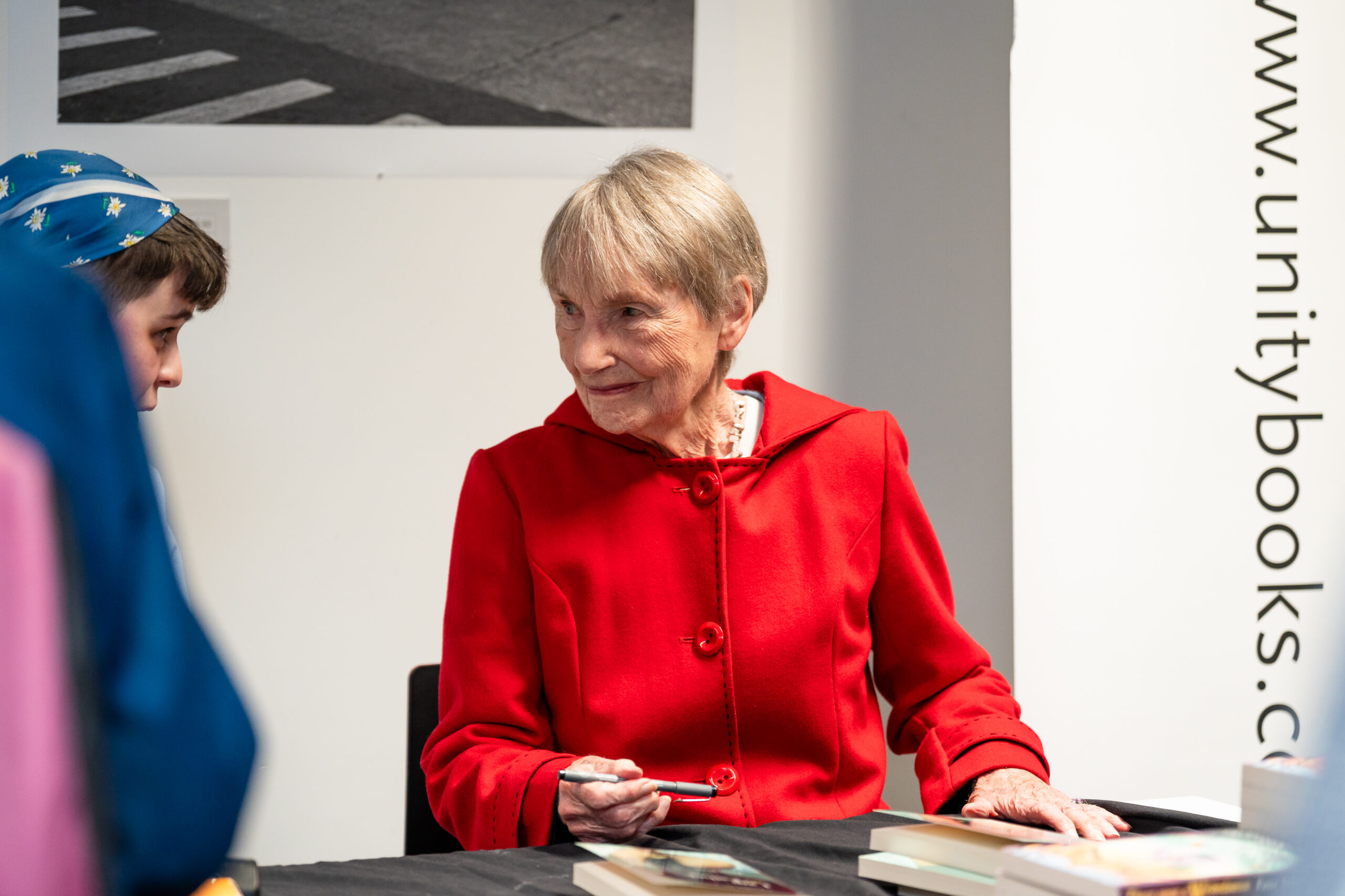
On Friday 25 September, Fleur Beale presented the New Zealand Society of Authors Janet Frame Memorial Lecture, in association with Verb Wellington and the National Library of New Zealnd Te Puna Mātauranga o Aotearoa. We’re pleased to reproduce her lecture here.
Tena koutou katoa. We honour those who have passed and the legacy they have left us. I acknowledge those kaumatua on whose shoulders we stand, especially Janet Frame, and most of all for me—Margaret Mahy, Ruth Dallas, Sherryl Jordan, William Taylor, Gaelyn Gordon and Jack Lasenby. I thank the Society of Authors who support, encourage and educate us and do so with such grace and kindness. We are so lucky to have you and to have all the volunteers who give their time and expertise throughout the regions. And a huge thank you to Verb who bring such excitement to the city.
So to the question of today, screens: Friend or Foe?
The only screen available in my childhood was the one on a Friday night in the Inglewood town hall and that was never going to be a threat to literacy. But the past is another country and they did things differently there. For example, AI in my childhood meant a technician arriving to inseminate the cows with superior bull semen. Artificial insemination is what AI was and still is
But the past is another country and they did things differently there
Childhood is such a seminal time for a writer. But alas, for me, I had a most unfortunate childhood for a writer in that I had loving, caring parents. My father was a laconic Taranaki dairy farmer with a good turn of phrase and Mum was an educated, creative woman who, had she been born a few decades later, would have had a stellar writing career rather than a fledgling one.
A cousin who, in her turn, became a writer, was envious of me and my five siblings. We had a mother who read to us and quoted reams of poetry she had learnt by heart. My cousin said we had words and sentences fed to us in a regular diet that became embedded in our psyches whereas she only got read to when she stayed with us and as an adult, she struggled with finding the words she knew must be there to express what she wanted to say.
That underlined for me, the importance of reading to children, of immersing them in a rich and varied language life. In my childhood there were very few books set in New Zealand although Mum found any that she could. But how lucky are today’s children? They have access to stories set here in landscapes familiar to them and using language that is also familiar while being enriched with what Julia Marshall, founder of Gecko Press, calls crunchy words.
… we had words and sentences fed to us in a regular diet that became embedded in our psyches
It’s interesting that when kids write to tell you they loved a particular book that very often the email will include a comment about how they loved reading about places they’d been to or lived in.
I believe it matters deeply that we have New Zealand books for New Zealand kids.
Messages from readers attest to this. I am Not Esther seems to have rung a bell with many readers. The following comment intrigued me because I’m not a visual person who sees scenes in my head. This reader wrote: ‘I read graphic novels because it helps me visualise the author’s intent, but with I am not Esther I could clearly picture exactly what was going on just by your descriptive writing.’
Then there was the mum of a couple of teenagers who started reading that novel assigned to her 14 year old daughter. They both ended up driving to libraries to get all three books in the series.
So, why do we write? Is it to get that charge of validation when a reader says how much they’ve loved a book you’ve written, or how it’s changed their life? It’s wonderful when that happens but there’s no guarantee that it will. Do we write simply because we just want to put our stories out into the world to share with people? I suspect not. I think for me and others it’s the fun of wandering around in a world you’ve created with people you’ve also conjured into being. It’s the fun of living inside a story. It’s just as well if we aren’t fixated on sharing our golden words with the world because currently, the world is very difficult to access via the traditional publishing route.

Which set me to wondering what it’s like to be on the publisher side of the equation. I and many others know very well what it’s like to be on the writing side. You send off your darling, into the wide blue yonder, and don’t hear a squeak for weeks or months. And the waiting is endless. Of course we send off emails, asking for news, even just a confirmation that the story has arrived. All of which adds to the poor editor’s workloads.
I feel for the editors who must deal with so many of us, all clamouring for our own particular darling to be fêted and celebrated, or even simply acknowledged. But that sympathy doesn’t stop me wishing desperately that things were easier and I can’t help recalling what now seem like the glory days of a golden era in the early 90s when there were many publishers of stories for children and they even sent out requests for what they’d like you to write. I ended up having stories published by Mallinson Rendel, Random House, Scholastic, Longacre Press, Gilt Edge, Lands End, Harper Collins, Radio New Zealand, and Learning Media. Ann Mallinson of Mallinson Rendel was bliss to be published by. I got irritated by the plethora of pink fairy stories girls were being swamped by at the time. So I dreamed up a character called Quin Majik who makes machinery to solve problems in ways that are magical but use real life equipment such as lathes and gas axes. I sent the story off to Ann and sat back to wait. An hour later she emailed back saying YES. Crikey, that was a long wait! There were three books altogether and my niece read them to her sons. But she came into the kitchen one day to find the cupboard doors open and the boys wandering around with a screw driver. They wanted to do a Quin Majik on the kitchen. Not so smart when your surname is not Majik. Those books went out of print when Penguin scooped up Mallinson Rendel.
Not so many years passed and gradually many of those outlets for authors disappeared, due to retirement of their principals or else they were absorbed, ie bought out, by bigger publishers. It’s a tragedy for the development of new writers that Learning Media has gone and the School Journal no longer accepts unsolicited material. Ditto RNZ which endlessly repeats the stories it bought years ago, including ones by my mother who died in 1993. We do not get paid whenever our stories are replayed but I do acknowledge that it’s pleasing to hear them appearing again on the airwaves.
I can’t help recalling what now seem like the glory days of a golden era in the early 90s when there were many publishers of stories for children
But the School Journal and Radio New Zealand were where many of us got our first inklings that we were indeed writers with something to say in ways that would interest, entice and intrigue young listeners. That endorsement was gold and gave the encouragement to keep going, to keep on producing stories about us in our own environment with Christmas coming at the correct season of the year.
So that’s from a writer’s point of view, but what’s it like for publishers in this climate?
Spare pity for them as well as writers. Publishing now is no stroll in the park. YA books and Junior Fiction just aren’t selling as well as they did a year or two ago, although there is light on the horizon if we follow the trend mentioned by the chief librarian of New York city library who said that many adult readers were now reading YA books—because they are generally shorter and with real and absorbing plots.
Some publishers overseas are using AI to forecast which books will sell. Some are using AI to streamline their work and also to predict how many copies of a title to print—and therefore what to offer the author as an advance.
But are falling sales and how to use AI to fix the problem, the things we should be worrying about? Rather, we need to look at the reason sales have tanked. WHY are kids not reading? Is it simply because screens are so much more attractive and addictive? That is part of the reason, of course. But there is a much more worrying reason. Research is showing that excessive screen time from a very young age makes neurological changes in a child’s brain. Kids are no longer reading because they can’t. Their brains cannot cope with the sustained focus needed to read and understand a long form text. Worse, some children are arriving at school not knowing what a book is.
Thanks to research from the Dunedin study—Growing up in New Zealand, we’ve known since the seventies that higher screen exposure at ages 2 to 3 is linked to lower language and education skills by ages 5 to 8.
Neuroimaging indicates that heavy media use in pre-schoolers is associated with measurable changes in brain growth and connectivity, specifically in areas managing attention and self-control.
So what happens to children’s brains? It’s a matter of white matter. We need it to connect up our neural pathways and underdevelopment means slowing down processing speeds, language, and literacy skills, also it diminishes the ability to self-control. In turn, this means a child is always going to choose the passive entertainment of the screen rather than actively engage with a book and is possibly going to throw a tantrum if denied the screen. And if we can’t entice kids back to reading and loving reading so that they willingly and voluntarily do so, then we’re sunk. Goodbye to more publishers. Goodbye too to the adult book industry as the cohort of screen addicted children grow to adulthood. And goodbye to a literate population.
Is there a solution?
What is the industry doing about this crisis? While some publishers fiddle around with AI, hoping it will solve the problem and somehow there will magically be a cohort of children demanding books, others are experimenting to find ways of making this happen.
What is the industry doing about this crisis?
What is the industry doing about this crisis? While some publishers fiddle around with AI, hoping it will solve the problem and somehow there will magically be a cohort of children demanding books, others are experimenting to find ways of making this happen.
Publishers here are generally wanting shorter books for both YA and midgrade or junior fiction. No more Harry Potter length books, now they are setting out to engage kids into reading by producing high interest books of around 40,000 words, books that jump right into the action. Often these will be illustrated without becoming graphic novels which are time consuming and expensive to make. Overseas, American publishers are hoovering up junior fiction titles and converting them into graphic novels. But they have four people working on each title and they already have the story to work from.
Graphic novels are accessible for many young readers who shy away from print books. They are a rising star in the publishing world overseas. There’s a bit of fluttering about whether consuming graphic novels is valuable and should be discouraged and that kids should be steered to ‘real books’. Sounds rather like the pearl-clutching that happened about comics when I was a kid. Back then, too, Enid Blyton was the enemy of reading in some quarters. Mum read them to us, cunningly stopping at a cliff hanger point so that we’d pick up the book and read the damn thing to save those kids. She bought us comics too.
Publishers here recognise that for many kids, there’s no value or interest in the act of either writing or reading. Who cares about books when there are games and video to entice and entertain? Plus you have to work harder for long form text.
But, cheeringly, there is a movement away from screens helped by the popularity of and rise of audio and graphic novels. As well, schools are beginning to fall out of love with widespread device usage, especially in the junior classes.
We have plenty of evidence of declining literacy rates and of the neurological brain changes in young children who are brought up in front of screens. Also we know that too much screen use affects ability to concentrate in adults as well as their ability to understand and analyse a text longer than a page or two.
… we know that too much screen use affects ability to concentrate in adults
You’d think that with all that evidence and those worrisome stats that the government would jump in and do something proactive to help the situation. So what do we get? Millions poured in to support and expand the literary sector? Not so far. The film commission gets $70 million to support and develop film, The music commission gets $3 million to do the same for music but, despite asking for one, there is no literary commission and only a woeful amount of contestable funding to be shared with all other arts forms. The money given to the film and music commissions is non-contestable. But apparently literature can’t have a commission and non-contestable funding because there is no money. Well, maybe it’s time to find some, that is, if we want to maintain New Zealand as a democracy with citizens capable of reading, understanding and analysing material.
Not so very long ago, the literature sector funding was on a par with visual arts and now it gets about half. A March survey showed that books were the art form New Zealanders report engaging with most after music. But literature, in the last contestable round got second to bottom in funding.
… we want to maintain New Zealand as a democracy with citizens capable of reading, understanding and analysing material
Contrast this picture with what’s happening in Norway, which, to be fair, is a very wealthy country. But even so what they are doing could be done here, on a smaller scale and make a huge difference.
Norway had a program of digital equity fifteen years ago where every child was given a device. But literacy levels 15 years later in 2022 had plummeted. One quarter of 15 year olds now fell below the required reading level.
But their government didn’t sit back wailing ‘woe is us’. No, they poured money into fixing the problem. In 2024 for example, the Norwegian government spent NZ$28 million helping schools buy physical text books, whereas previously that money was spent on digital resources. The government also tripled spending on school libraries since 2021. The arts council in Norway buys 1,550 copies of every children’s book that meets their strict criteria, and 700 copies of adult fiction to stock every public library. That guaranteed market must make such a difference to publishers.
Compare that with the dismal and depressing scene here and compare here with the huge investment also happening in the UK and Australia where there is cross government investment in reversing literacy trends and long overdue investment in books and writers.
There are however still kids who love books. A quartet of Christchurch intermediate students came second in the international Kids Lit Quiz reading challenge this year. It’s a competition that was set up and started by New Zealander Wayne Mills and has been gaining popularity since its inception. One of those students told a reporter that ‘it takes a lot more effort to read a book than just stare at a screen because you’ve actually got to think about what’s happening and process that.’
The school’s librarian says that while evidence shows the important role of school libraries in improving literacy and reading they are not mandated in New Zealand schools. She feels it’s ludicrous that such a fundamental building block of literacy is ignored.
I remember how excited I was in standard six when my country school got a library . . . shelf.
Even today, not all schools in Aotearoa New Zealand have a library and school libraries are not mandatory in our schools. While most of them have either a library or at least a library space, not all do and having a trained librarian is not mandated either. Most schools responding to a 2024 SLANZA survey did have a permanent library space. But 24% of the responders did not have a permanent library space. Some schools with library space regularly lose it when extra classrooms are needed, for example towards the end of the year when new entrant numbers have increased. Libraries seem often to be seen as emergency spaces when space for classrooms is scarce or compromised. The government appears to be relying on the results of that survey but unfortunately, as SLANZA president points out, the survey is flawed because although 1800 surveys were sent out, fewer than 700 schools replied. The research points out ‘results may be skewed towards schools that have library spaces and paid library staff.’ and the findings ‘reveal a range of concerning equity issues, especially for small schools, rural schools, and schools with more socioeconomic barriers’.
Those who never read in depth do not develop the ability to recognise fake news, to think through complex issues, or to form a well-founded opinion
That survey asked schools what their greatest challenge was regarding libraries and most frequently they said it was students’ decreased interest in reading books. That’s not going to magically improve all by itself.
We have brilliant publishers here, struggling with operating in a country with a small population and little or no government support. We can’t all go and live in Norway but Australia is possible and it’s where the very successful Brian Faulkner went to live because he saw that he’d be able to make a living over there as a writer but that here it wasn’t possible.
We know we have a problem. Kids aren’t reading as they used to. Adults aren’t reading so much either. Then there’s the Flynn Effect. The Flynn effect, identified by James Flynn in 1984, is the finding that IQ has increased by around 3 points per decade over the past 100 years. But is it now reversing? The experts are divided but experimental psychologist, Falk Huettig, posits that the decline in IQ comes from us not reading so much now, a trend noted at least 30 years ago, ie pre internet. In the Pisa tests which are given internationally to 15 year olds, Huettig points out that the highest level of reading proficiency, which involves working with long, unfamiliar, and complex texts, is now achieved by only around 2% of 15-year-olds in most countries.
He says: ‘Those who never read in depth do not develop the ability to recognise fake news, to think through complex issues, or to form a well-founded opinion. Reading is not merely a cultural skill. It is the foundation of democratic participation.
So how do we overcome the Flynn Effect? How do we change what we’ve been doing so that we create and sustain a nation of readers and citizens who are capable of understanding and analysing what they read? We live in a democracy and to continue to do so we must maintain a population that is literate, that can read, understand and analyse what is read.
… we must maintain a population that is literate, that can read, understand and analyse what is read
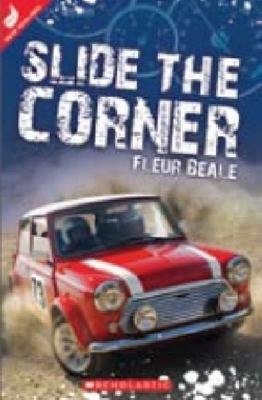
How do we change things? The shorter book format for both YA and middle grade fiction, with stories that jump straight into the plot is a starting point. And what is selling? Fantasy and romantasy. Humour, particularly beloved by boys who also like technical details of how stuff works. But it must be woven into a story that grabs them. David Hill’s book set beneath Taranaki Maunga, Below is one such book. My first YA book, Slide the Corner was full of driving and motor rallying info thanks to the experiences of my late husband Tim. That book stayed in print from 1992 to last year and I only discovered it was out of print when I began getting cries of pain from people who’d read it in school and now wanted a copy for their own teenager. I’m very sad that the book is no longer available as I know it worked for a wide variety of kids. The following email from a teacher warmed my heart: ‘I just wanted to let you know that they are all EATING your book. In the past I have had to harangue them regularly to do a tiny bit of homework, but half of them came in today five or six chapters ahead of schedule. I’m not often speechless, being a teacher.’
Bring on Print on Demand though I guess that would mean your book was never out of print so you’d never get the rights back, which would be fine for the likes of me who does not want to tangle with self-publishing. It gladdens my heart that some publishers here are now offering Print on Demand.
Slide the Corner took ages to appear after Scholastic said they’d take it. My agent, the late and brilliant Ray Richards later told me it had been turned down by all Scholastic’s overseas branches except for Australia. Canada didn’t want it, neither did the US or the UK. Apparently they found the language too difficult. Not the occasional place name in Te Reo, but the New Zealand humour. It just didn’t resonate. That’s important for publishing here. It is vital that kids of all ages have books written in styles and language that do resonate with them so that they are enticed to keep turning those pages and absorbing the content.
I did write more books with boy protagonists that were full of technical stuff that I had to get checked thoroughly because I didn’t understand it. Dirt Bomb was about a group of kids who resuscitate an abandoned Holden and make it into a paddock basher. I had an expert advisor for that book, my nephew Tim who was one of a trio of friends who did just that.
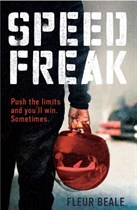
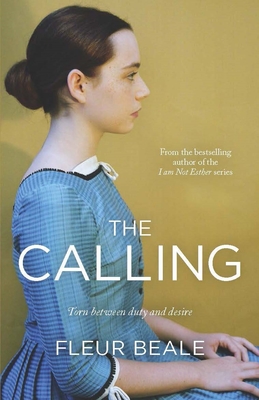
Other books followed, Deadly Prospect about dirt bike riding, Speed Freak about go kart racing. It was a relief to change to history and write about a young woman who comes under the mentorship of Suzanne Aubert, founder of the Sisters of Compassion. That book, The Calling, came about because Sister Margaret Anne, leader of the congregation at the Home of Compassion asked me to write the story of Suzanne Aubert as a young woman. But my publisher said they wouldn’t publish a story about a girl from another country and a different century, so, with relief, I concocted a story about a girl who wants to become a Sister of Compassion and goes to live at Jerusalem, Hiruharama, on the Wanganui River just before the beginning of the twentieth century.
But that was then, back before screens were ubiquitous and pernicious. The future is another country. We have to do things differently here.
The future is another country. We have to do things differently here.
The SLANZA survey respondents rated students’ decreased interest in reading books as a challenge, and responses to the final, open-ended survey question illustrate the nature of the challenge: ‘Engaging students to read is getting harder every year. Students are very disengaged from reading’. This is a huge problem as literacy rates are dropping. There were related comments on a perceived drop in students’ reading perseverance, resilience, and abilities: more and more students will not read any long texts.
This is also something authors doing school visits have to confront. Award winning author Melinda Szymanik wrote an article about authors feeling the pressure to be performers in order to engage students. But if we turn up with props, puppets and a puppy, then are we devaluing the book itself? Are we saying, look, the words aren’t enough on their own.
Teachers reported feeling concerned for the future of many of their students who often do not move beyond picking up a ‘quick read’ as their reading book. There is an increasing demand from students for accessible graphic novels and texts which are easy to read as reading ability has lowered. One of the quartet of Christchurch students who did so well in the Kids Lit Quiz advises kids to read beyond the first page, get to page eleven and then if it’s still boring jump to page twenty-seven, then if you don’t like it you can put it down. An intriguing challenge for authors.
So the fix: what and how?
What I’m thinking is, yes, shorter manuscripts, but also short chapters. Plenty of white space on the page. Maybe give each chapter a title. Fast paced stories. Stories with humour and adventure and good pacing. Pay particular attention to the first 11 pages and to page 27.
Fantasy is popular and probably will remain so. Teens love writing fantasy as well as reading it—diving into a world where they call the shots, into a world they control.
Romantasy is also popular, but readers of the genre expect lashings of sex. More technical stuff that I just can’t be bothered with. Which part goes where and what name do you give the bits. The research could be challenging.
Which part goes where and what name do you give the bits …
But back to making reading relevant and popular. Back to the days of Dickens when readers were hanging out for the next instalment. Some overseas publishers are publishing Book One of a series, then the following books in that series at two month intervals so as to keep readers engaged and wanting more.
Others are creating books of around 400 pages but some of the pages are blank while others have few words on them, such as seven to a page.
We need to treat the web as our tool not fear it. Publish episodes of stories on whatever platform kids will use and share with their friends.
Film is already doing this with vertical microdramas. Overseas, especially in Asia, this is a multibillion dollar market. And if it takes off here, I don’t think it’s going to help our literacy rates. These films are designed in small bites of 2 to three minutes per episode. They are vertical because they’re filmed so that the viewer can watch them on their smart phone screens. The first few episodes are free but if you want the whole story you pay. Young adult fiction, whose readers are already living on short-form video platforms, is an obvious fit for adaptation to the microdrama format. The idea with these is that an episode can be viewed while you’re waiting for a bus, the dentist or a job interview. Heaven forfend that you should ever be bored.
Audio is becoming increasingly important with many people preferring audio to print. A recent poll in the US also found 41% of respondents don’t consider audiobooks as a form of reading.
But psycholinguists disagree and say that many of the benefits gained from reading a book are the same when an audio book is consumed. There appears to be the same level of comprehension for audio as there is for when a book is read.
Heaven forfend that you should ever be bored
But is audio good for kids in the same way as it is for adults? Kids do still need to be able to comfortably and swiftly decode text and build their literary skills so do need printed books. But audio can augment this by getting kids intrigued by story, helping them follow a plot, understand characters, draw inferences. Literacy expert, Sue McDowall (senior researcher at the New Zealand Council for Educational Research) says ‘both reading and listening to books brings many of the same cognitive benefits. There is also research showing that engaging with texts in any form, especially fictional texts, can help develop empathy, perspective taking, and social participation’.
But the benefits for child readers or listeners will no doubt depend on screen exposure as well. Audio still requires the consumer’s sustained attention and isn’t as effective when the listener is multitasking and dealing with distractions. Attentive listening means being able to follow a plot and draw inferences and understand characters’ motivations. It builds vocabulary and empathy as well as providing enjoyment.
We need to treat the web as our tool not fear it
We shouldn’t write screens off as all bad though. They are extremely useful and effective for helping neurodiverse and vision-impaired kids who struggle with reading paper texts as screen settings are adjustable, eg to use a larger font, increase line spacing, and choose sans-serif fonts (like Arial or Comic Sans) over italics or complex lettering. It’s easy to change backgrounds to a warm overlay to stop text jiggling.
Screens are also where kids are publishing their own work, reading stories posted by their peers, commenting on and enjoying them.
Screens can be very effective for teaching new migrants, as it can be for some struggling readers and writers. However, its efficacy depends on how the screen is used. If used with an adult who is also engaging with the content, it can be a highly effective and useful tool. Guided use in limited chunks of time seems to be the key to successful screen based learning.
Unguided use though leads to what researchers call ‘the screen inferiority effect’. That sounds like a warning—and it should be. Reading on screens affects the way our brains process information. It reduces the ability of the brain to absorb, keep and understand what is read. According to Michael Rich, a US paediatrician and Harvard professor, the growing human brain is constantly building neural connections while pruning away less-used ones, and digital media use plays an active role in that process. Much of what happens on screen provides ‘impoverished’ stimulation of the developing brain compared to reality, he says. Children need a variety of online and offline experiences, including the chance to let their minds wander. ‘Boredom is the space in which creativity and imagination happen’, he says.
Boredom is the space in which creativity and imagination happen
From overseas, initiatives are filtering in about various ways to bring kids back into reading as a fun occupation. Something to be shared with friends. District-wide sites controlled by schools where kids can post reviews, comments and opinions can create a reading buzz and help make reading a desirable hobby.
My feeling is that we have to innovate, we’re no longer in the past, we’re in a future where we must do things differently. It would be wonderful to have millions of dollars’ worth of support from the government but I don’t feel we can afford to sit back and wait for that to happen.

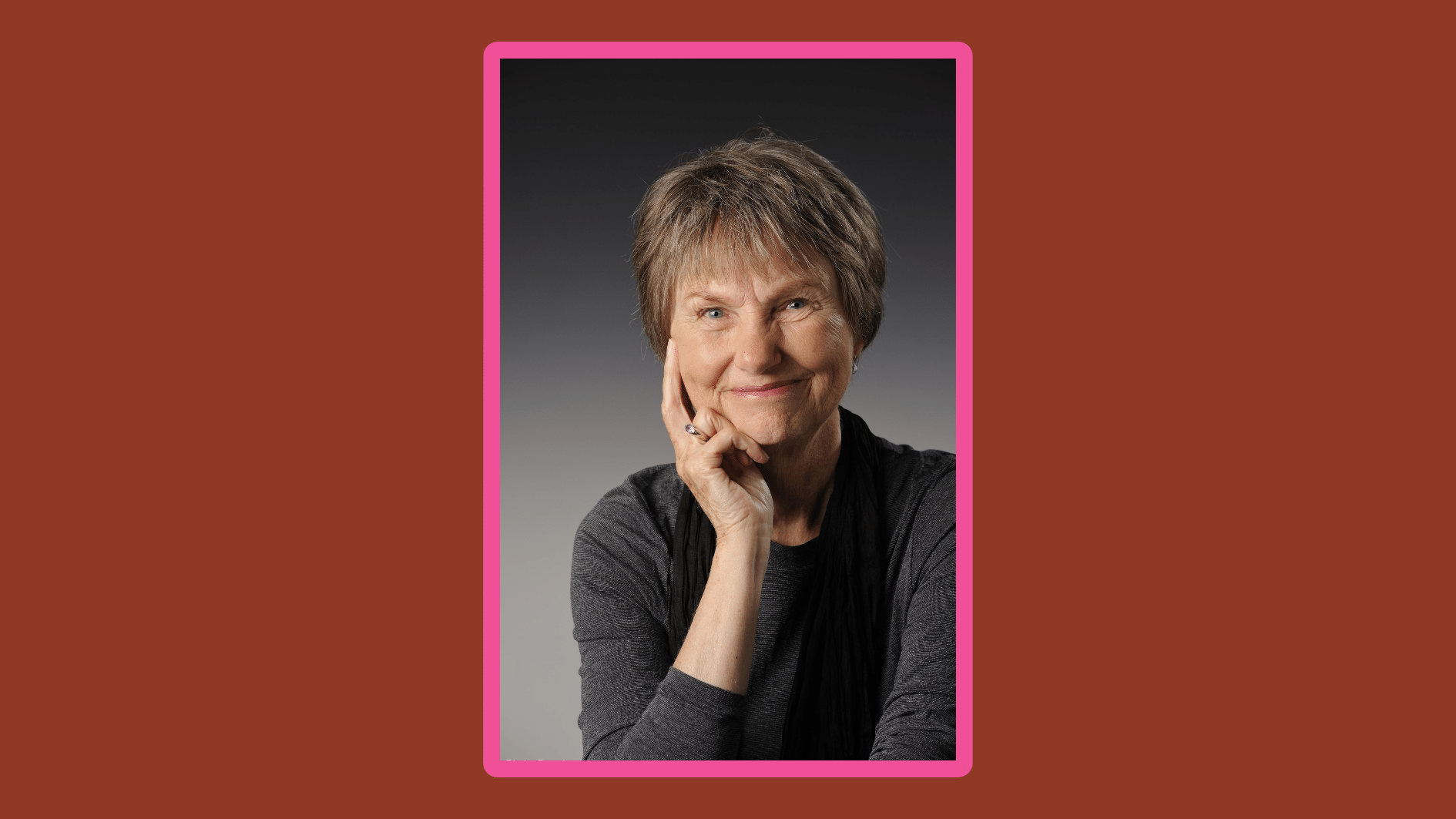
Fleur Beale
Fleur Beale started writing in the '80s when she was teaching in a secondary school and couldn’t find stories that resonated with the kids in her classes because there were almost no books about NZ kids and their lives. Writing appeals partly because she can be the boss of her own world.