Claudia Palmer speaks with esteemed writer David Hill about the lasting impact of Dame Whina Cooper, the importance of te reo Māori and what he hopes New Zealanders will take away from his latest picture book Mother of the Nation.
Claudia Palmer (CP): What drew you to the story of Whina Cooper? And why is it important to tell this story today?
David Hill (DH): I was asked by Penguin Random House New Zealand in 2023 to write the text for a picture book on Whina’s life and achievements. I was very hesitant at first. How was an elderly provincial male Pākehā qualified to write about this dynamic wahine Māori who influenced Prime Ministers and was instrumental in the establishment of the Waitangi Tribunal? But then I thought that there are a lot of other New Zealanders like me, and a book that perhaps informs us and our children could be very valuable indeed.
CP: While synonymous with the 1975 Land March, Whina Cooper lived a very full and varied life. How did you go about capturing so much of her life story in such a short format like this? What was your process?
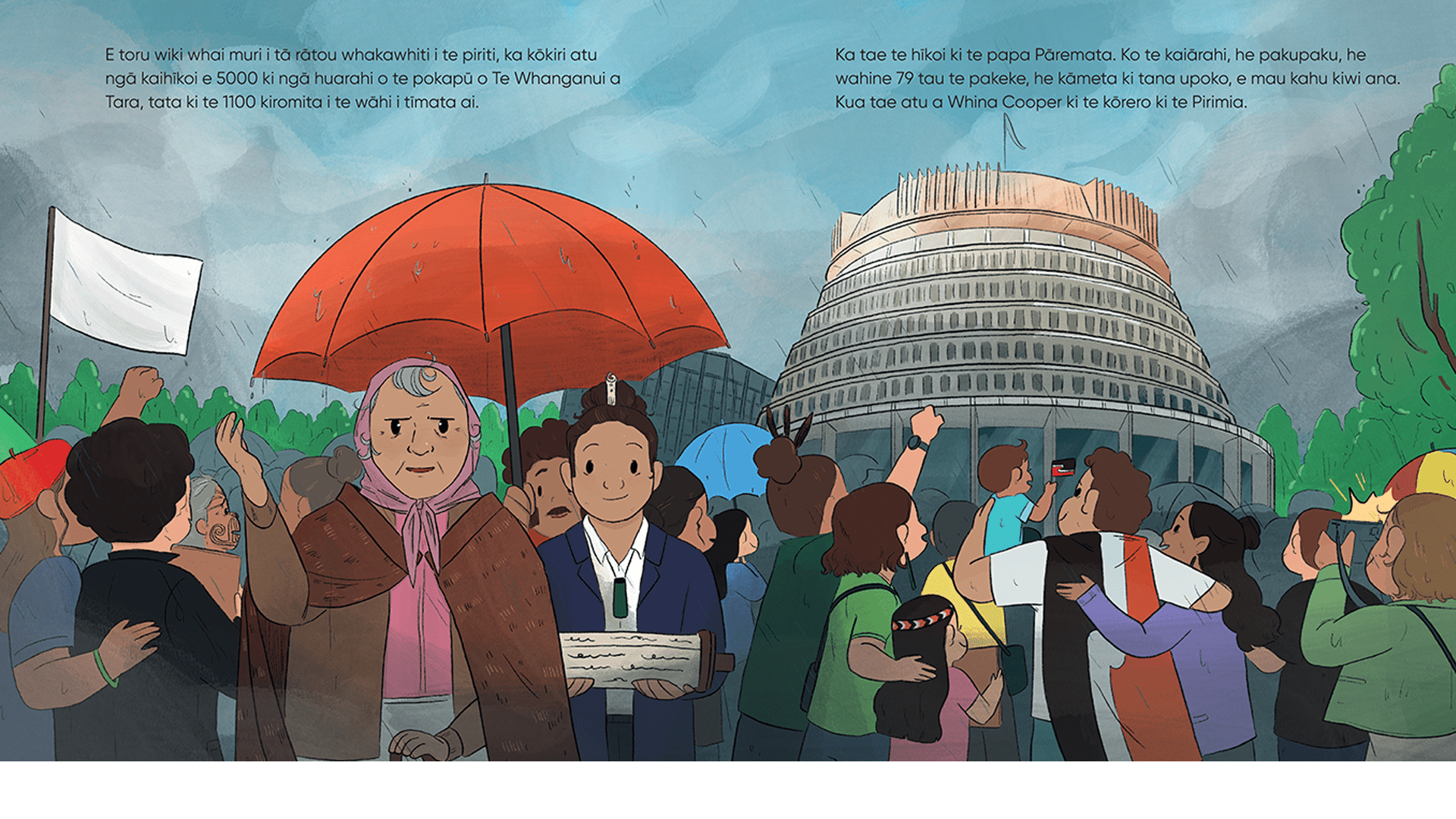
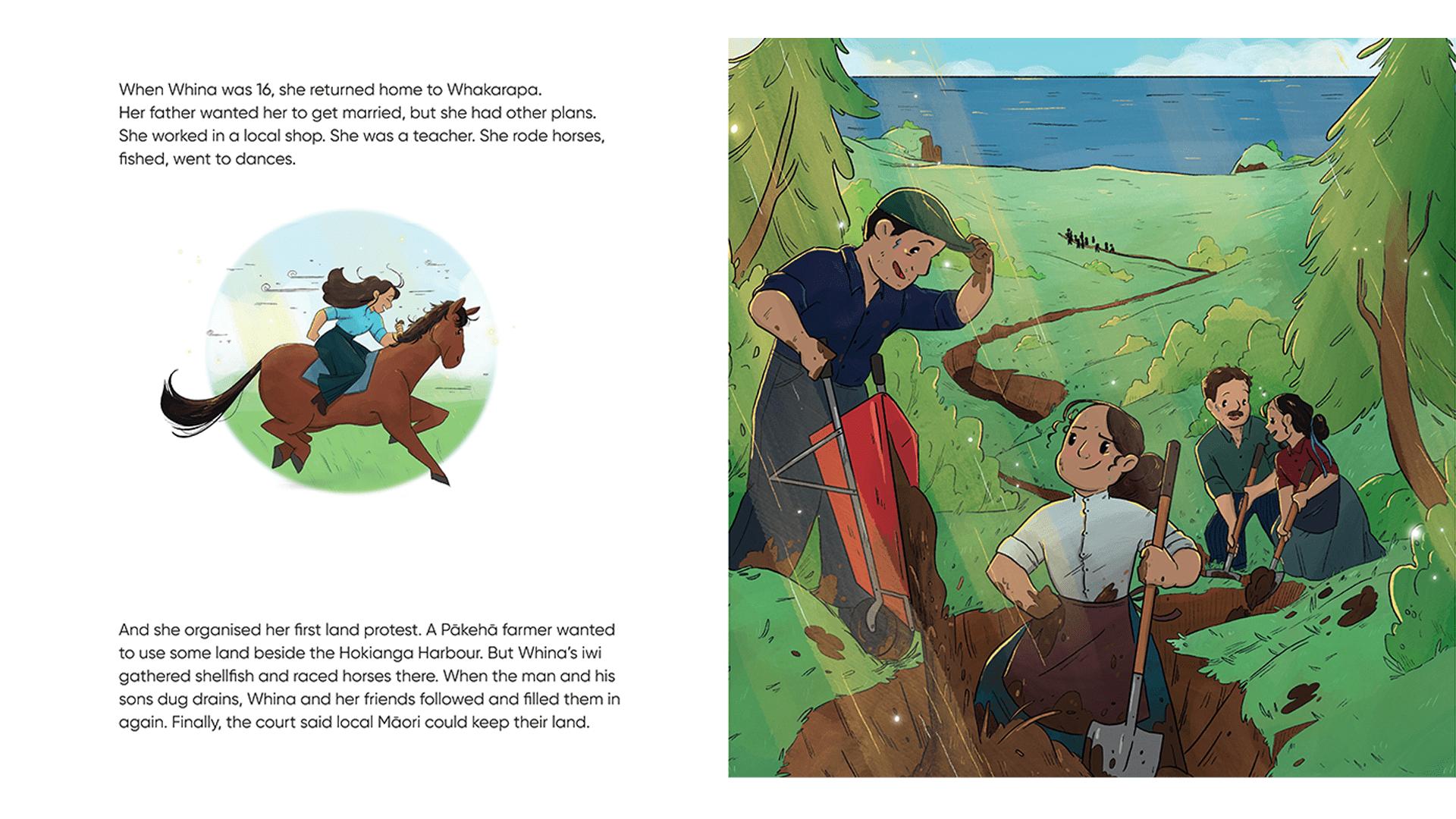
DH: I followed the process I used for the other picture books that Penguin Random House has got me to provide text for. I read and looked at images and listened to TV and radio archives. I wasn’t able to travel, unfortunately, but I ransacked online and local sources, building up some 12,000 words of notes. Then I had to reduce those by about 90% for the book. So I wrote drafts (in longhand) of decreasing length, trying to tighten, trying also to keep dramatic events. AND knowing that Story’s illustrations would do much of the story-telling. Her vibrant, enchanting and authentic images are the real strength of the book. I was helped hugely by Diana Murray and Catherine O’Loughlin, editor and children’s publisher at Penguin Random House, who so gently kept me tightening and focusing the manuscript.
‘They enhance our discourse. They acknowledge te reo as one of New Zealand’s official languages.’ On the uses of kupu Māori in the English-langauge edition.
CP: Where were you in 1975? And what do you recall of the Land March and Whina Cooper at that time?
DH: In 1975, my wife and small son were in the UK as part of our 2-year European amblings. We came back with a small son and even smaller daughter, which was unexpected but wonderful. In the scraps of news that reached us, in various places from New Zealand, there was regular mention of a doughty Māori kuia called Whina Cooper, who was a leading figure in a march from Northland to Wellington’s Parliament Buildings to publicise and demand fair land rights for Māori. What a mission, I thought. What power and determination. And wasn’t the march itself such an epic narrative.
CP: The book is published in both English and Māori editions, and you’ve chosen to include many Māori words throughout the English text. Why is this important to you?
DH: Stacey Morrison has written what I’m sure will be a terrific te reo edition of the book. We included te reo words in the English text because such words are increasingly becoming part of everyday New Zealand English, and because they often carry extra and/or specific meanings that English doesn’t. They enhance our discourse. They acknowledge te reo as one of New Zealand’s official languages. And how could I write ANYTHING about Whina without acknowledging her language as well?
‘Her vibrant, enchanting and authentic images are the real strength of the book.’ Story Hemi-Morehouse illustrated the book.
CP: You’ve covered remarkable and inspiring lives in this picture book series from Jean Batten to Sir Peter Blake. Are there traits that stand out to you about this group of people?
DH: Whina and the other eminent New Zealanders about whom I’ve written picture book texts have shown so many varied strengths and skills. Two qualities I feel they all have in common are vision and endurance—the ability to focus on a grand scheme and to persevere in the face of problems and opposition.
CP: What do you hope children will gain from learning about our history?
DH: I hope young readers (and older ones, because so many picture books are read TO kids by parents and grandparents) will feel pride and a degree of awe that our country was home to such an inspiring—and I don’t use that word casually—and memorable figure. I also hope they’ll get a sense, if they don’t already have it, of the reverence and respect with which Māori people regard their land. And, I hope they’ll love Story’s terrific illustrations!
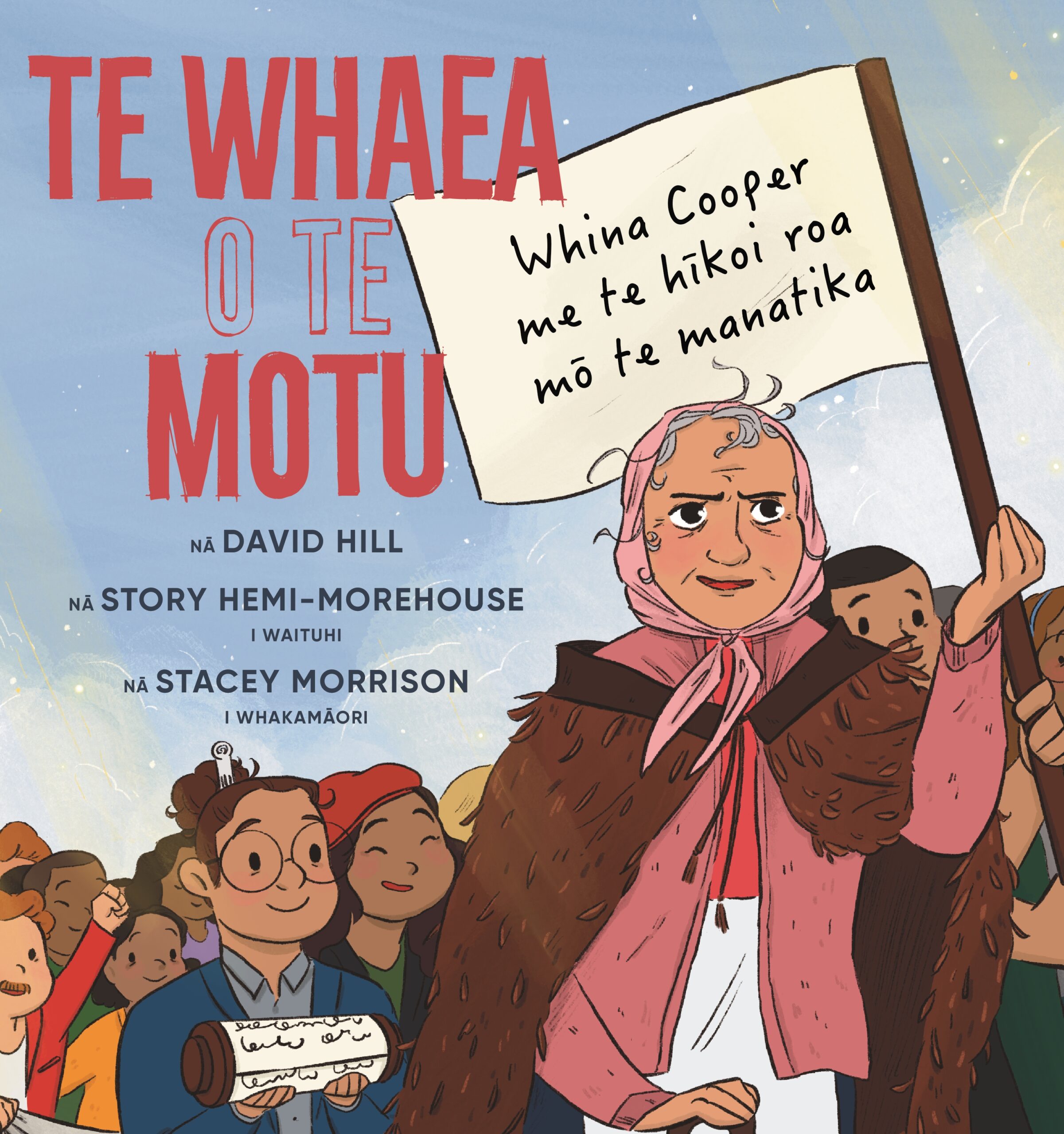
Te Whaea o Te Motu – Whina Cooper Me Te Hīkoi Roa Mo Te Manatika David Hill, translated by Stacey Morrison and illustrated by Story Hemi-Morehouse Penguin Random House New Zealand $25.00 Buy now
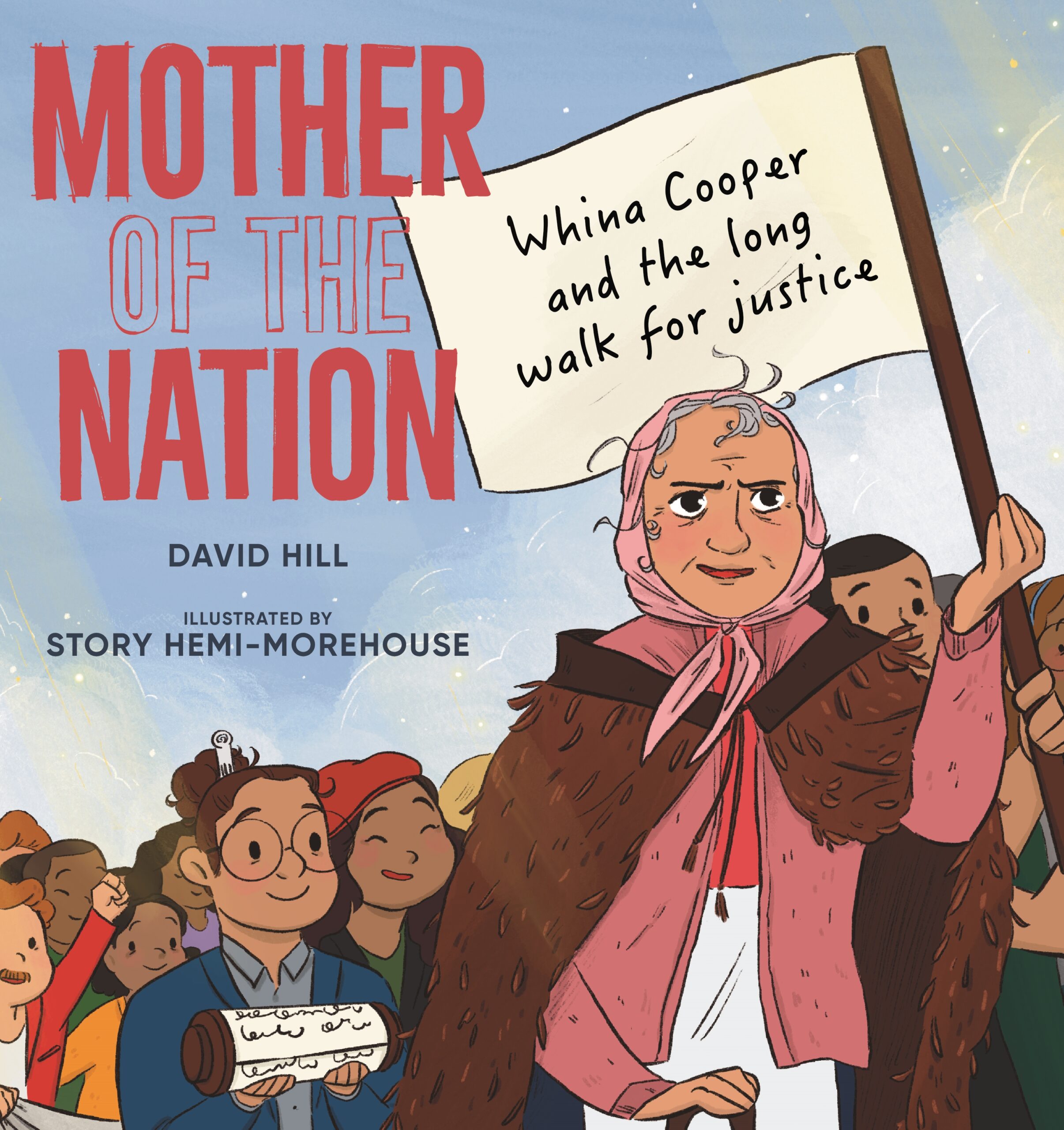
Mother of the Nation: Whina Cooper and the Long Walk for Justice David Hill illustrated by Story Hemi-Morehouse Penguin Random House New Zealand $25.00 Buy now
Claudia Palmer (Te Rarawa, Te Aupōuri) has a background in campaigning and marketing. After completing the Whitireia Publishing course, she worked for Huia Publishers in Wellington promoting award-winning books and authors. It was during this time, she realised just how life changing great children’s books can be. She now lives in the wildlife capital of Aotearoa, Ōtepoti Dunedin, with her partner where she works as an advocate for nature and taonga species.