


Hamish Win reviews new non-fiction on William Pickering, tākapu, estuaries and rock pools
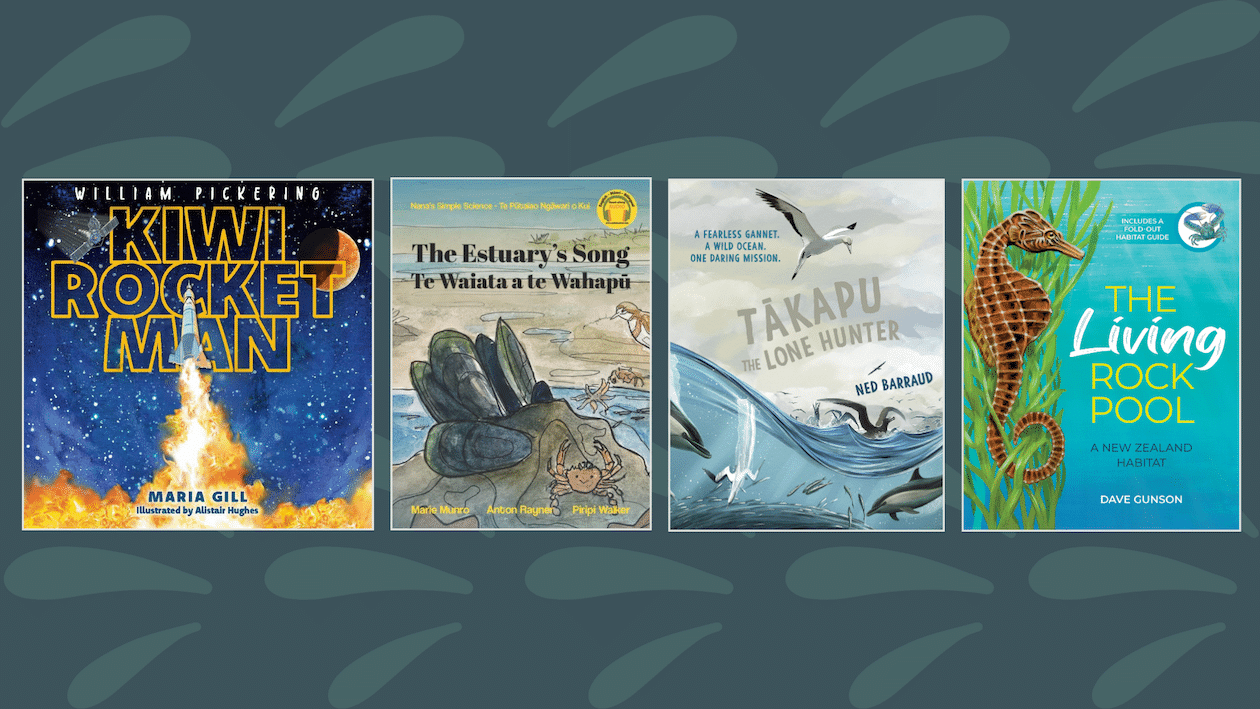
William Pickering: Kiwi Rocket Man by Maria Gill and Alistair Hughes
Pete Seger once proclaimed that he knew songs about horses and railroads and automobiles but none about rockets. This he suggested would be the work of the next generation. Maria Gill has clearly grasped this narrative niche. At a time when Rocket Lab is heralded as a kiwi success, William Pickering’s a predecessor worth excavating. Attending the same school as Ernest Rutherford, (what did they put in the water?) Pickering’s innate curiosity eventuated in him leading Nasa’s Jet Propulsion Laboratory and pioneering the discovery of Earth’s solar system.
Each double page spread is given over to a significant event in Pickering’s life. Joining the astronomy club at Wellington college, graduating from Caltech, enlisting into the US Navy to work on sonar and developing long range missiles, before being part of the team that successfully launched Explorer 1 into space in 1958. And what a great page that is—you turn the book horizontally and ‘blast off’. Gill’s book is worth it alone for Alistair Hughes’ wonderful illustration of a rocket leaving earth’s stratum.
The book is also couched in what drives Pickering, his innate curiosity. There’s a wonderful spread during his early days where he’s in chemistry class learning how to make a percussion denotator. The tamariki’s faces are enthralled. You can just see how this would drive someone on.

Pickering’s team sent satellites to Venus, Mars and the moon, all achievements Pickering has been lauded for. There are three roads named after him in Aotearoa and a mountain in Fiordland. And yet he’s anything but a household name. Hopefully this book goes some way to remedying this.
Gill’s book is clearly aimed at spurring on our engagement with space but it’s also pointedly a book about determination. She writes early in the book that ‘curiosity is the spark’ that drives discovery. She’s been clever to convey this in such a factual book.
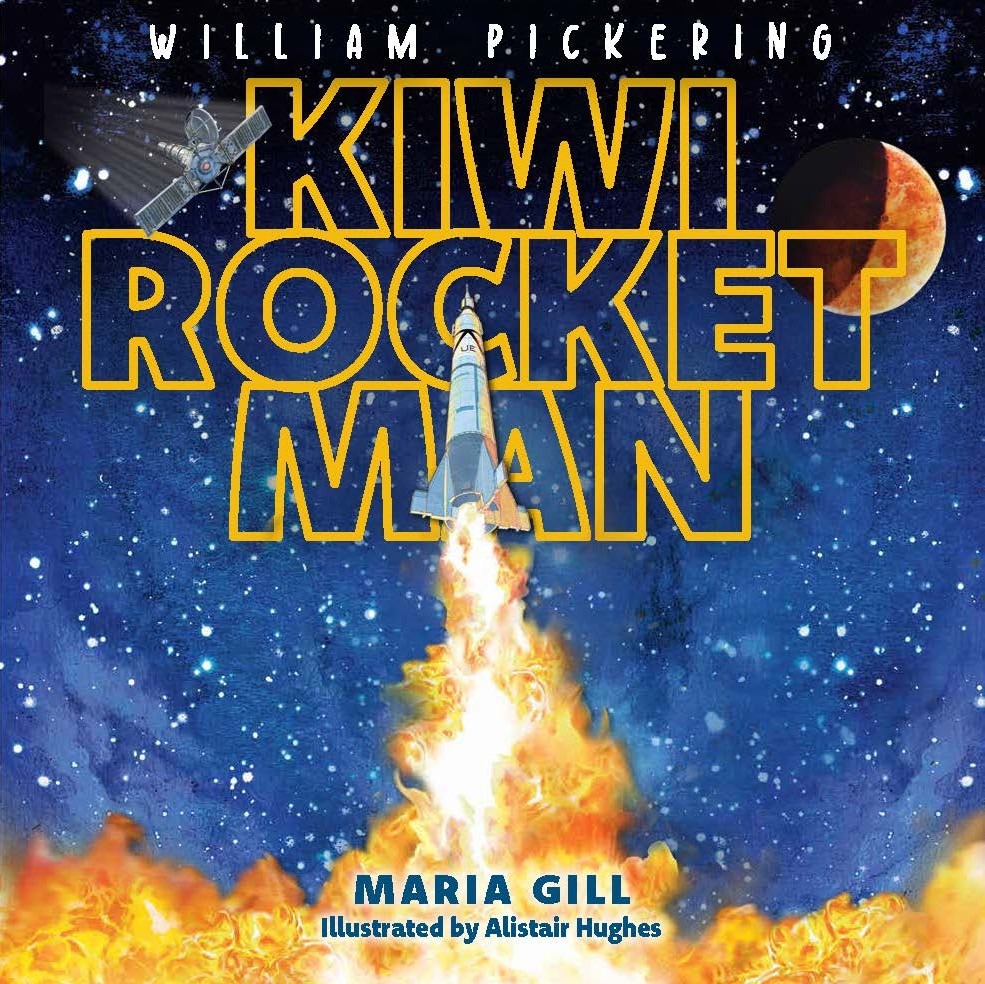
William Pickering: Kiwi Rocket Man
Maria Gill
Illustrated by Alistair Hughes
Bateman Books
$21.99
Buy now
Tākapu The Lone Hunter, by Ned Barraud
Wow, what a book. Superbly illustrated. Every page comes alive. It’s so dynamic and animated. Barraud doesn’t mess about. The narrative is set right from the beginning. Showing us a gannet colony from afar before zooming in on a mother and hungry chick. With the next page Barraud has her lofting into the air and setting off into the ‘bright blue sky’ to find a meal for them both. The story centres on this tākapu going out to find food for her chick. Hence the subtitle, ‘The Lone Hunter’.
Barraud cleverly embeds this hunt around a host of other marine animals. Spotting a group of aihe (common dolphins) herding pilchards from afar, the tākapu swoops down to join the feeding frenzy. Into the mix too, Barraud adds sharks, penguins, kahawai and even a Bryde’s whale. This is a great way to show us something of the ecology and liveliness of the marine environment.
It’s certainly a truly informative book but it’s also full of action and compassion for its characters
There are great illustrations throughout and Barraud handles them with care. Take the image of the gannet’s bonding dance, a cliché if ever, but Barraud uses it to explain how this ritual cements their relationship and care for their chick. Similarly, Barraud’s images of a breaching whale, a swimming penguin with fish in its mouth, or the nose dive of a gannet, are all handled adroitly and packed neatly into a narrative arc that never feels overtly sentimental.
It’s also worth pointing out that this story’s plot never feels overly burdened by its non-fiction credentials. It’s certainly a truly informative book but it’s also full of action and compassion for its characters. I’d recommend this book wholeheartedly.
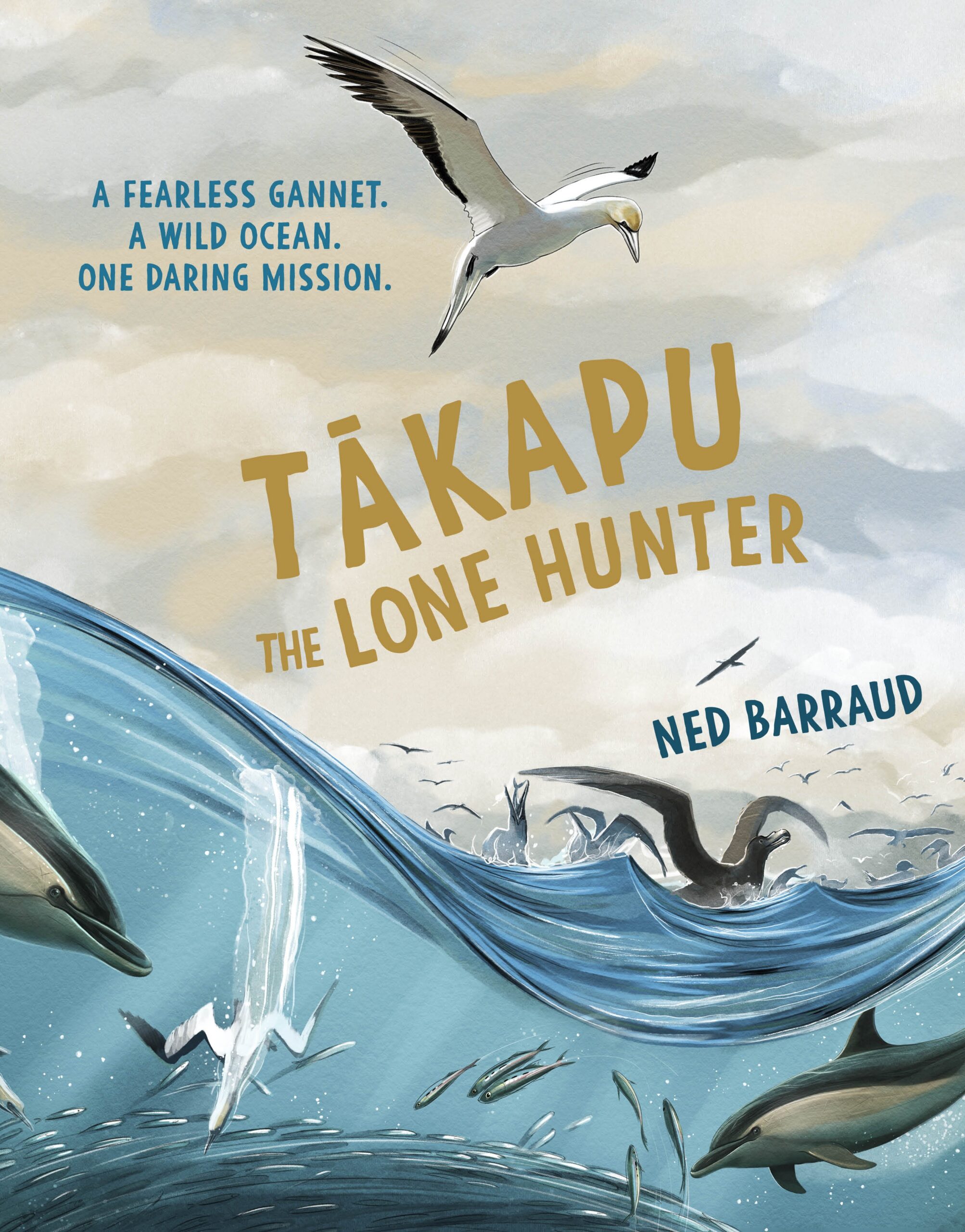
Tākapu The Lone Hunter
Ned Barraud
Allen and Unwin
$24.99
Buy now
The Estuary’s Song / Te Waiata a te Wahapū, by Marie Munro and Anton Rayner, translated by Piripi Walker
This is a fantastic pukapuka. Bilingual and broken out into short sentences, so you can easily scan between the two languages. Switching between them is a breeze. The English has a slight rhyme to it which is seductive but the reo rolls along easily too. Lots of great kupu to wrap your arero around.
The illustrations are loose and done in a wash style which suits the subject matter. The water flows into the wahapū and out again. It’s cyclical and fluid. Raynor’s not scared to change perspectives or scale, zooming in on the kuku (mussels) and then widening out to take in a satellite impression of the estuary when we are following manu flying overtop.
But it’s not a book to simply celebrate the estuary; it places humans firmly within it. Our intrusion and effect upon it but also our responsibilities for it. There’s a lovely scold in it: ‘Ma te huri i ā tatou tikanga mahi!’. We can’t go on poisoning our environment and pretending we have no effect on it. We must do our bit, fence our waterways, divert our pollution, let everyone and everything enjoy the estuary. It’s a site of vitality for so many: ‘Kua pai te noho o te aotūroa’!
… it’s not a book to simply celebrate the estuary; it places humans firmly within it
A series of questions is also included which we can use to prompt discussion about wahapū. What they are, how they form, who lives there, what makes them special. But also, how we humans can damage them, what our role in the ecosystem is, how we can practice better kaitiakitanga, how we too can dwell in nature, responsibly, reflexively. With its brilliant illustrations and subtle story telling this is a brilliant book to bring awareness of te taiao to tamariki.
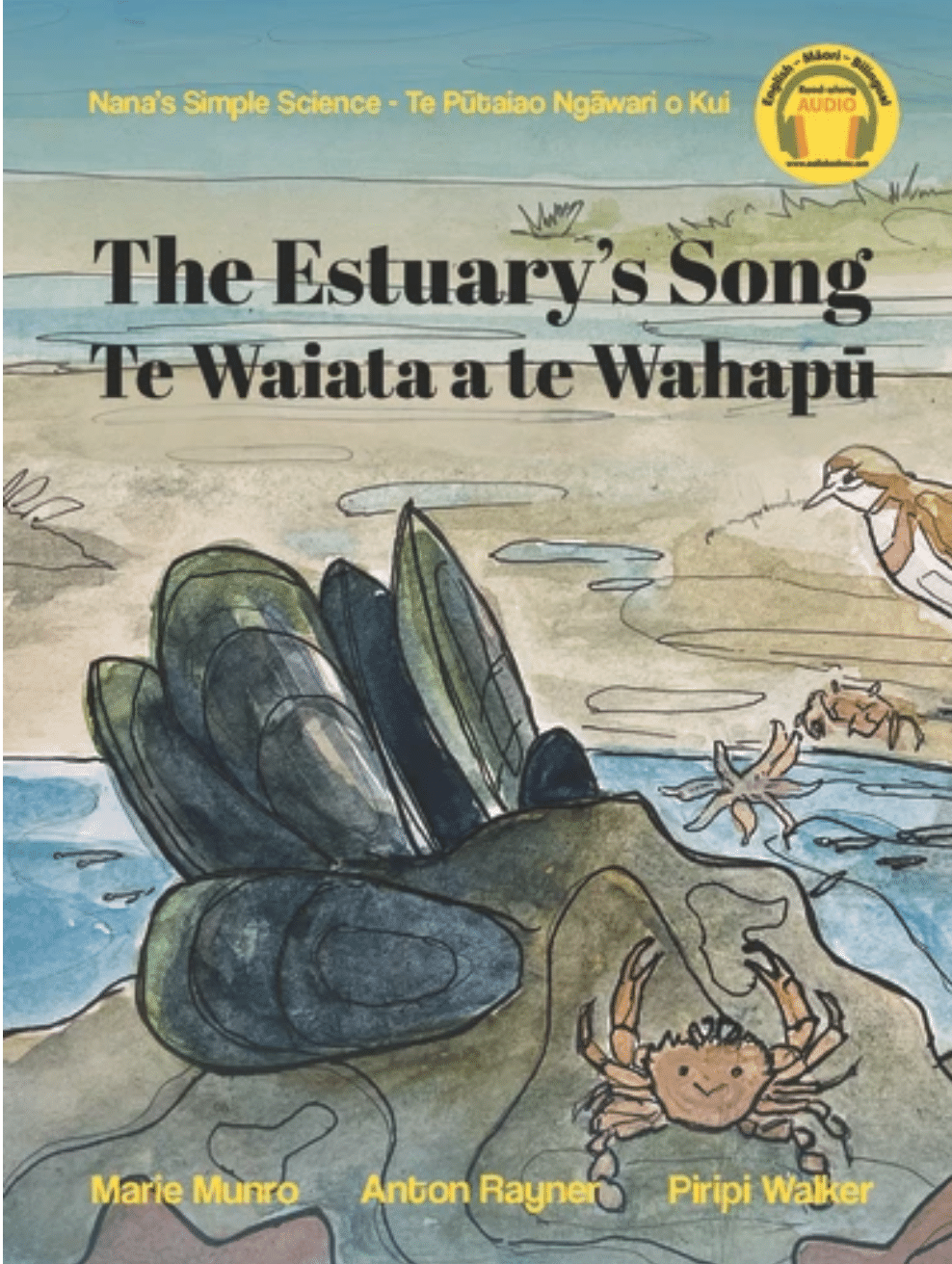
The Estuary’s Song / Te Waiata a te Wahapū
Marie Munrow
Illustrated by Anton Raynor
Translated by Piripi Walker
Nana’s Shed Books
$25.00
Buy now
The living Rock Pool, by Dave Gunson
What a comprehensive book! I kid you not. There is a wealth of knowledge and expertise embedded in here and with such casualness and acuity it’s really quite impressive. It leaves me a bit dumbfounded if I tell the truth. What can you say?
The book features a handy habitat guide. Each animal or flora of the rockpool habitat is isolated and indexed. This makes it easy to identify the specimen and then race to the info blurb about it. I can easily imagine how you could approach a rockpool with this in hand and be able to answer everything you ever needed to say about the life that is teeming within them.
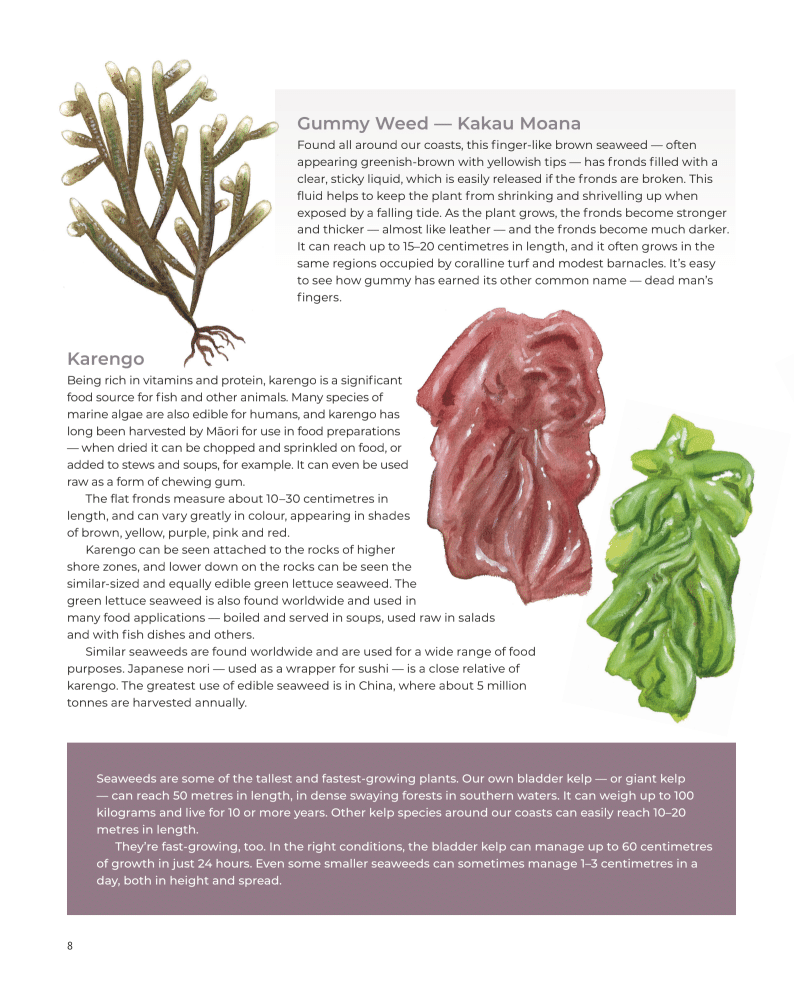
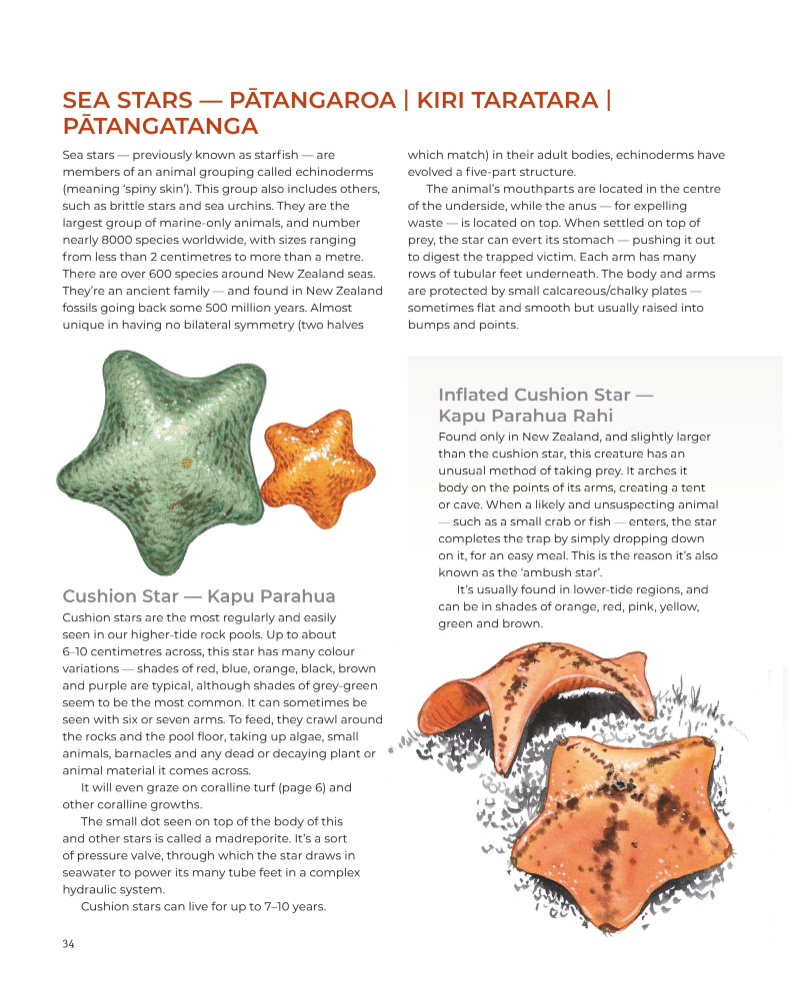
I suppose what we’re dealing with here is the ultimate field guide. I certainly can’t imagine going to a rock pool without it. It’s hard to get past just how comprehensive it is, but that should also tell you something about the life that lives in them.
It’s also a very approachable book. The illustrations are generous but they’re not ‘scientific’, they’re idiosyncratic in a way. They’re very hand-drawn, avuncular even in the way your uncle might impart knowledge. They don’t overwhelm but they also include all the information you’d need to identify the animal or fauna with exactness.
So yes, a brilliant book, but it’s a book for the world. Don’t expect to read it on the couch. You’re gonna be rock-pool side and you’re gonna be wading in. Expect it to get splotchy and salty, just as any good summer time book would.
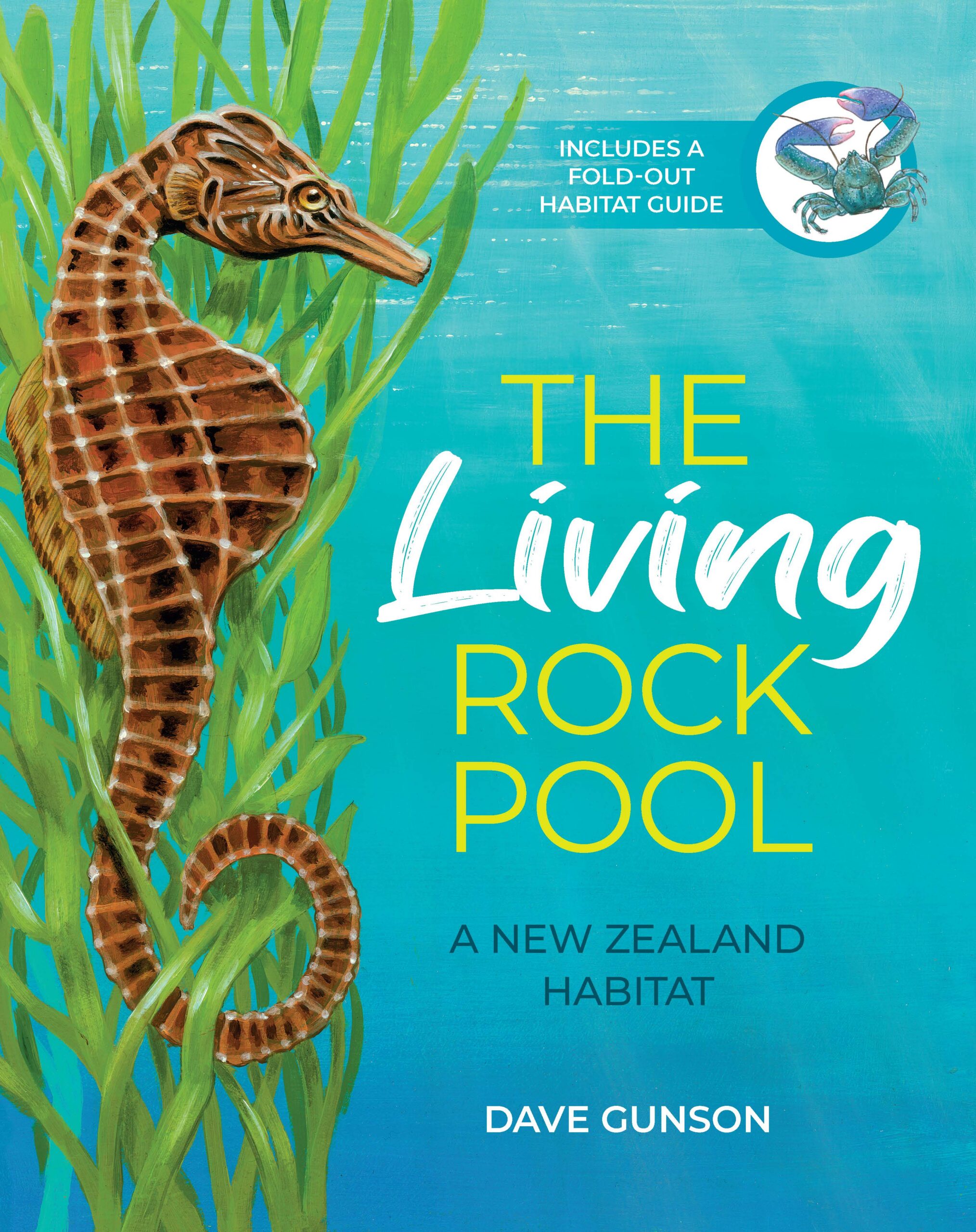
The Living Rock Pool
Dave Gunson
Bateman Books
$24.99
Buy now
Hamish Win
Hamish Win writes about contemporary art for Circuit. He works at Real Bread Kitchen on the weekends and goes to Whānau Tupu Ngātahi o St. Albans with his daughter Cleo during the week.