


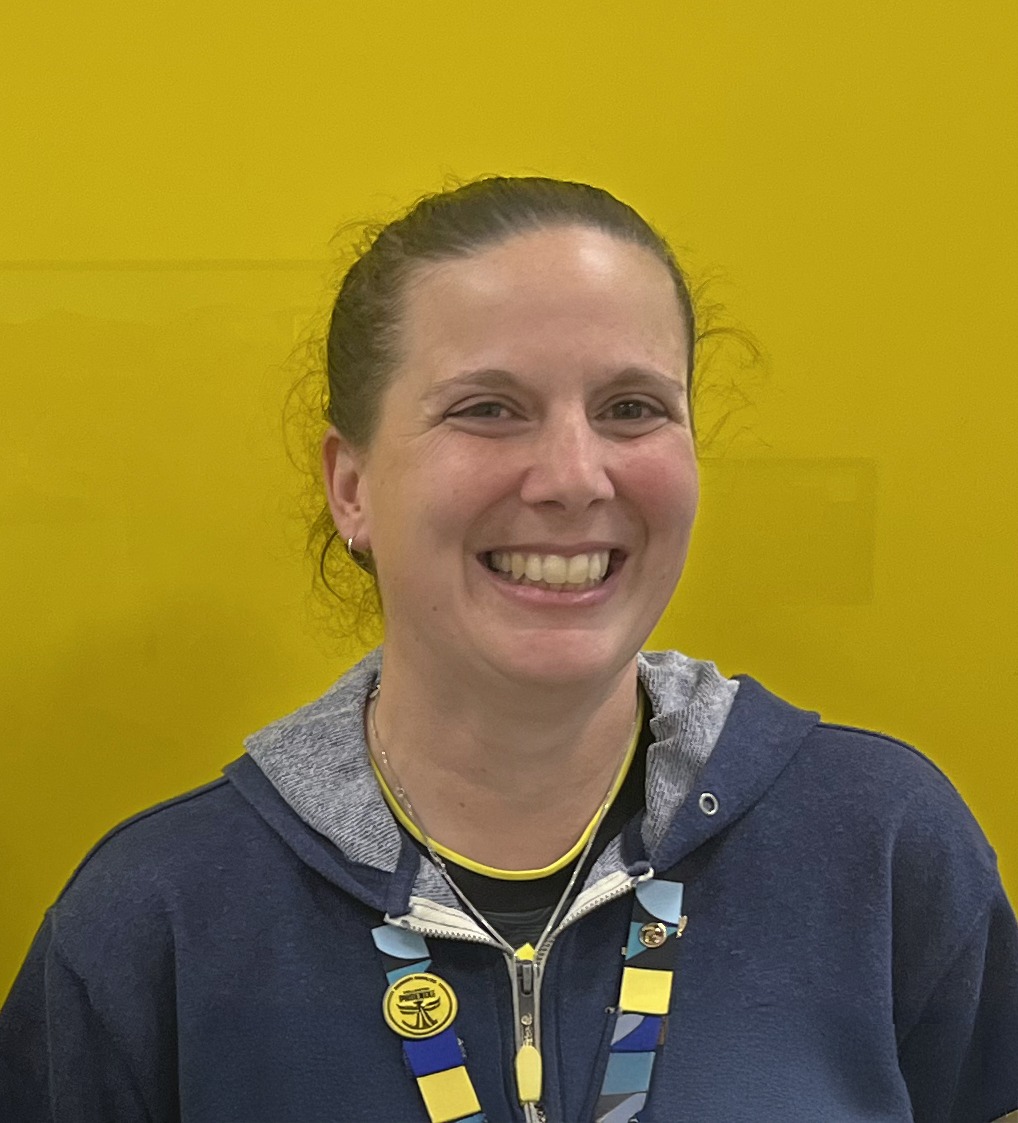
Librarians Claire Guest, Merritt Barnett and Stephen Clothier took the five finalists in the New Zealand Book Awards for Children and Young Adults’ picture book category to library storytimes, and share the tamariki’s reactions here.
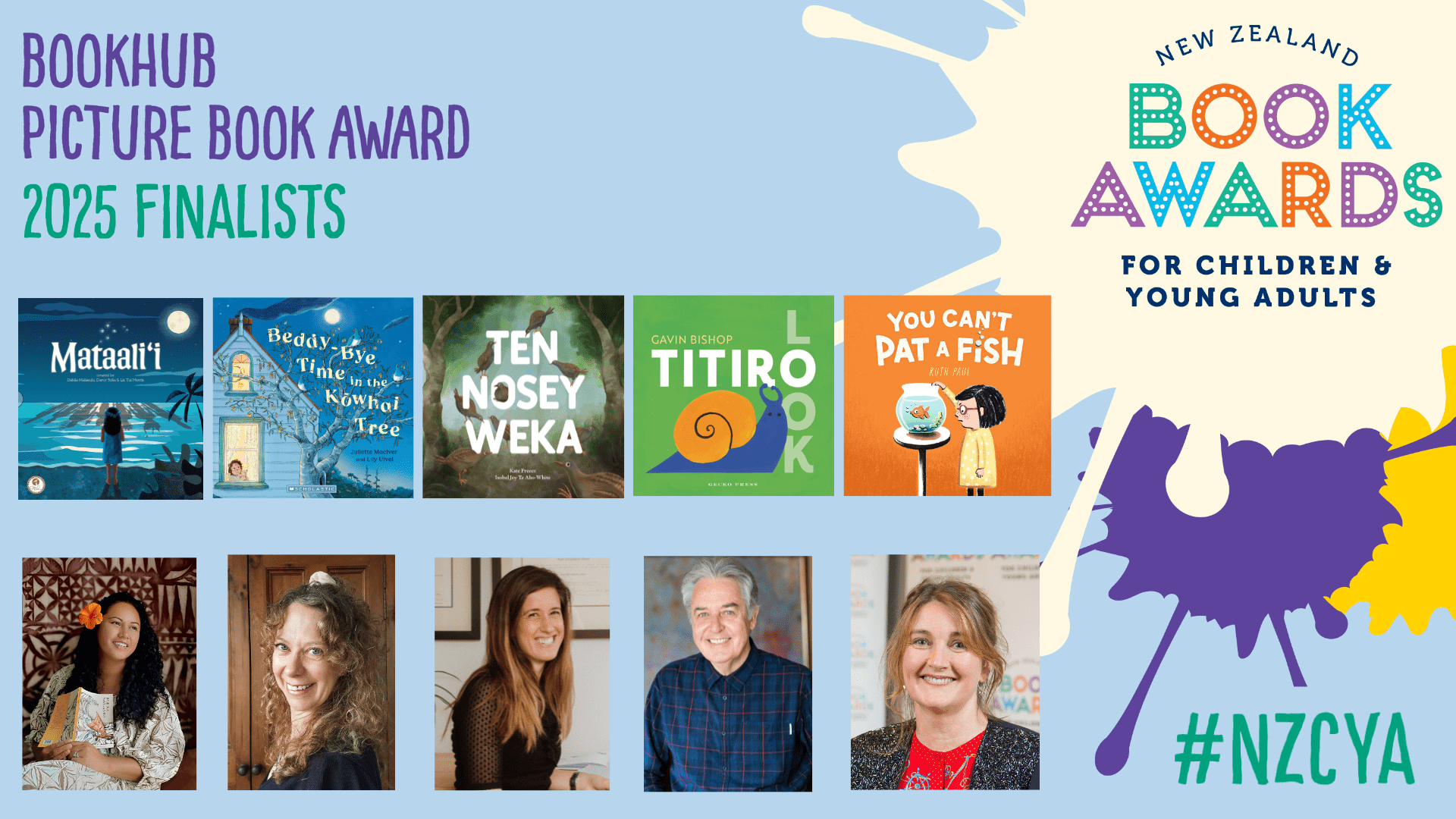
At Te Matapihi ki te Ao Nui | Wellington City Libraries, we eagerly await the publication of the shortlist for the New Zealand Book Awards for Children and Young Adults—picture librarians huddled anxiously around computer screens awaiting the announcement, exclaiming with joy and anticipation upon seeing the list go up, scrolling to see if our favourites have made the cut.
This year, we were especially energised by the quality of the Bookhub Picture Book Award shortlist—and our children’s librarians wasted no time in gathering together our copies of these pukapuka ataahua and testing them out on the tamariki of Wellington during our library storytime programmes, when visiting local kindergartens, and of course with our own little ones at home. Intrepid children’s librarians Claire Guest and Merritt Barnett brought these books to life with the help of the tamariki of Waitohi | Johnsonville Library and Pikopiko Clyde Quay Kindergarten.
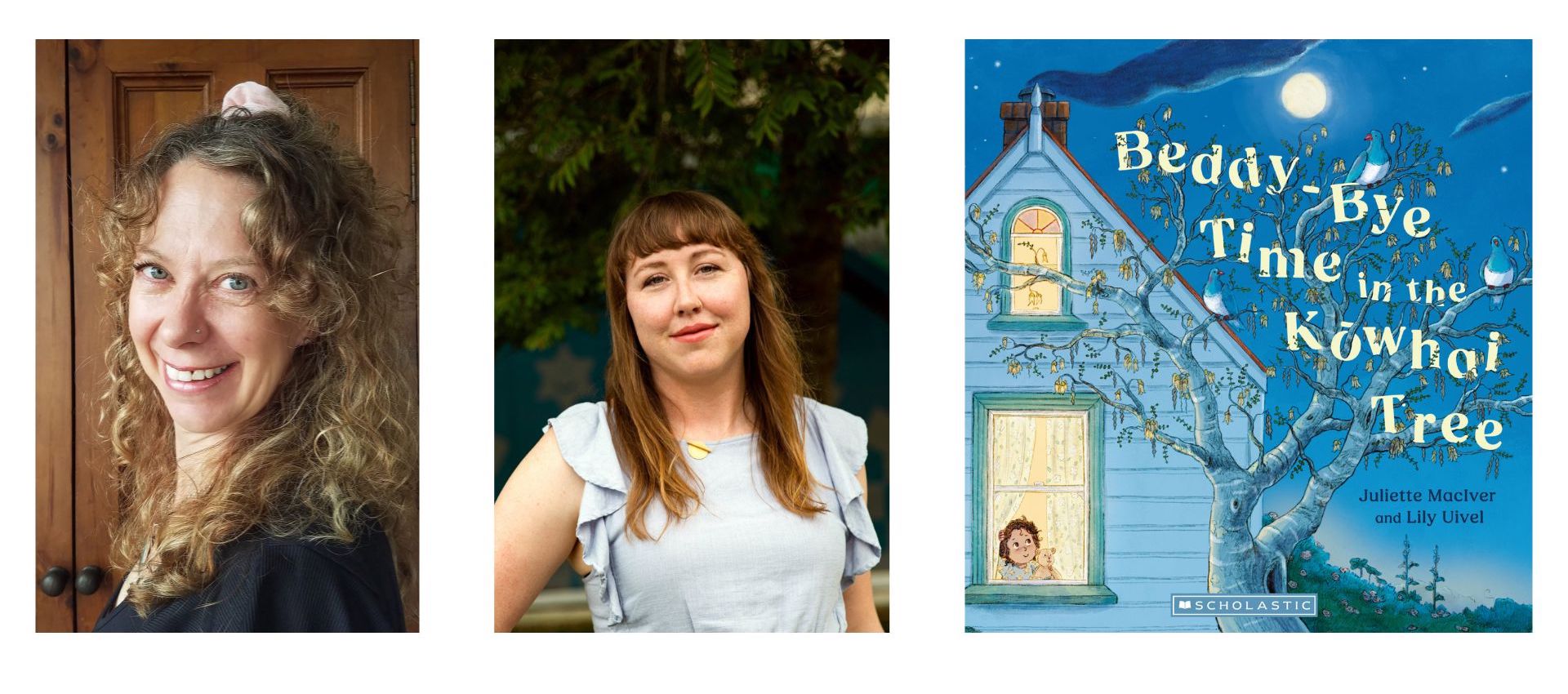
Beddy-bye Time in the Kōwhai Tree, by Juliette MacIver and Lily Uivel
Merritt Barnett [MB]: I feel confident saying that this is a bedtime book. Why? Because it’s a story about going to bed! I found that it also worked very well in a storytime context despite the smaller physical size of the book and the fact that we were reading it in the morning, far too early for bedtime.
The tamariki found the phrase ‘Beddy-bye time’ unexpectedly hilarious and also got very into counting out loud together at every opportunity. There are opportunities for silly singing in different voices as the different creatures and objects sing to the child who’s off to bed. It did take me a little bit of thinking to figure out a singing voice for the moths and the toilet-paper seashells!
Hilarity for the tamariki was found in bedtime wees and toothpaste sprees …
As a story about going to bed, the tale moves through the different bedtime activities with opportunities for silliness (that bedtime wee!), examining exactly what’s going on in the illustrations, and number fun, before bringing us to a calm and sleepy ending. I like using books with this kind of structure in a storytime, as they allow interactive fun but end on a calm note, rather than leaving listeners too excited and riled up.
And did anyone else catch that the bedtime-story-within-the-story was Juliette MacIver’s Duck Goes Meow?
Claire Guest [CG]: The whole book feels like bedtime. The image of the protagonist looking outside into the dusk compared with the warm indoor lights was really comforting. Reading at storytime, the tamariki were engaged throughout—they loved spotting and counting their way through the story and could clearly see their own bedtime routines paralleled in the book. I found it beautifully ‘New Zealand’ in its telling and imagery, with kea, taniwha, sheep and smatterings of te reo Māori throughout.
Hilarity for the tamariki was found in bedtime wees and toothpaste sprees, and ‘Beddy-Bye’ caused a few titters each time as well, despite its repetition.
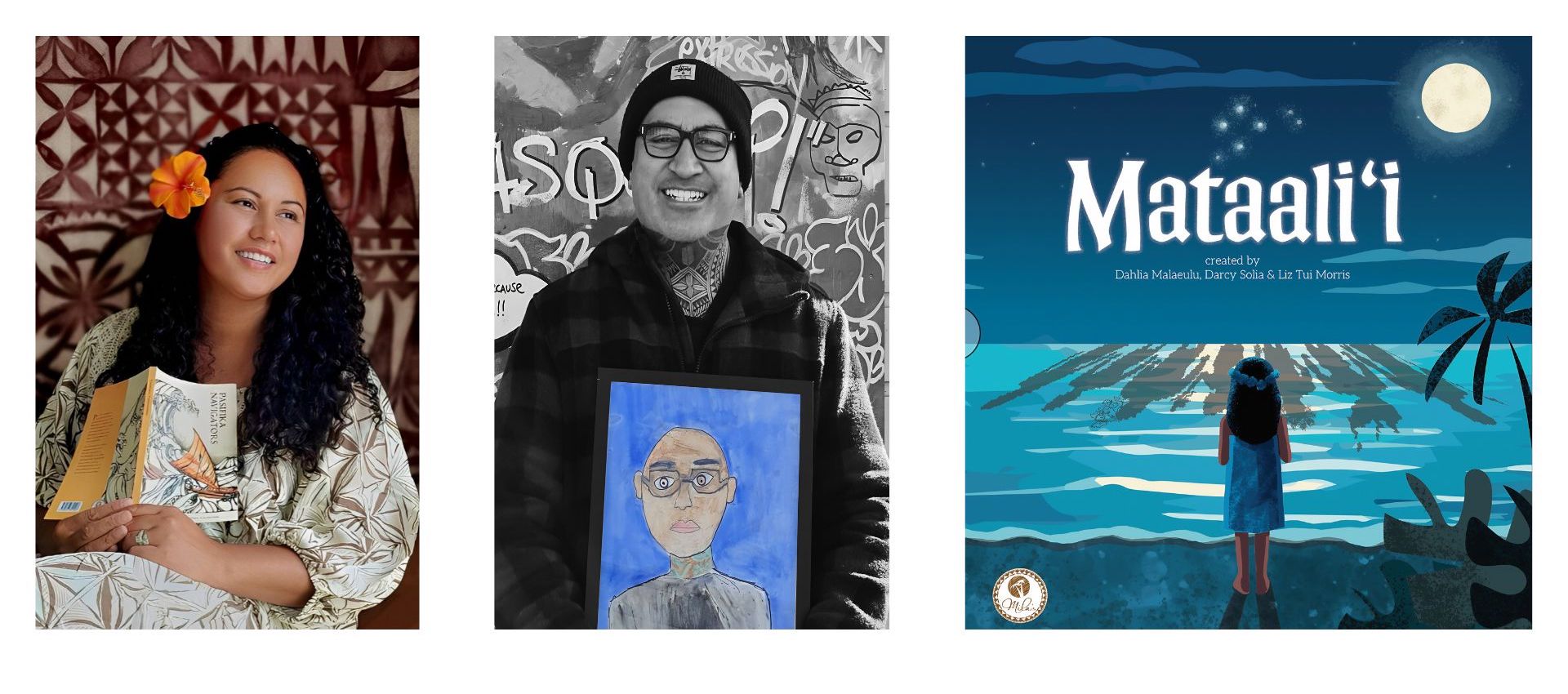
Mataali’i by Dahlia Malaeulu (Vaivase Tai, Sinamoga) and Darcy Solia
MB: I can see this story working well with primary school-aged tamariki, particularly at this time of year when Matariki is on our minds. Nevertheless, I read this pukapuka to a group of preschoolers and they were enthusiastic about counting the stars as they appeared in the sky towards the end, and sharing all the Matariki facts that they knew!
The stars of Mataali’i have many different names, meanings, and connections all around the world and this story could work well as a starting point to get students thinking about these stars and how they are celebrated in different places. I was sad to read about the lack of knowledge around the original story of Mataali’i. I think this sadness is reflected in this book, particularly in the anguish in Fetū’s face as she says goodbye to her siblings, one by one, as they turn into stars.
And I’ll add that as someone who’s always lived by the ocean, I really enjoyed how the illustrations captured the different moods of the sea at different times of day.
CG: I love this one as an alternative story for Matariki—one that could lead to wonderful discussions on how the same Pleiades star cluster features in stories for so many cultures. The illustrations are bold and engaging, and the story moves along at a good pace.
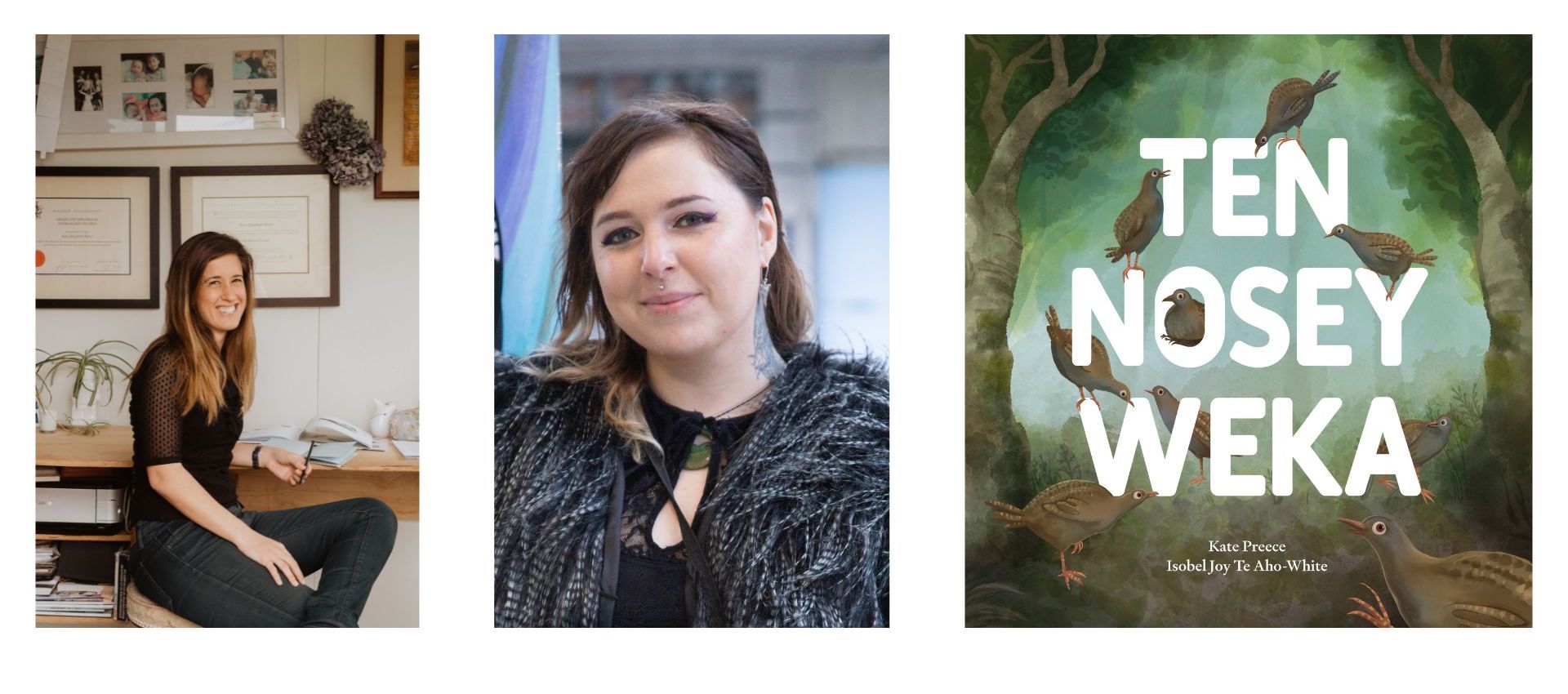
Ten Nosey Weka by Kate Preece and Isobel Joy Te Aho-White (Ngāti Kahungunu, Kāi Tahu)
MG: I read this book in a storytime session right before we took a break from stories to stand up and do some rhymes with a lot of actions and movement. In hindsight, we really should have stood up, pretended to be weka, and acted out the story together. That’s a plan for next time!
In this pukapuka we start with ten very nosey weka, and that number slowly diminishes as we continue through the book. Two tamariki insisted on physically counting each weka so I can confirm with confidence that there are the correct number of weka on each page.
As well as the story about these mischievous manu, this pukapuka encourages learning some basic numbers and words in ta rē Moriori and te reo Māori, as well as in English. The numbers are presented in these three languages on each page, and the rhyming text also includes a new word in ta rē Moriori. To help us learn these words, they’re also presented subtly in the corner of the page in all three languages so I could easily double-check any word meanings without flipping all the way through to the glossary at the back. Very cool!
… a great opportunity to spend more time with the lush illustrations
Once the story is done and the ten nosey weka have all finished with their adventuring, there is some information about the Chatham Islands and ta rē Moriori, ten fantastic weka facts, and a search and find challenge for tamariki. This gives a great opportunity to spend a bit more time with the lush illustrations. I didn’t catch that fantastic side-eye from the pukeko judging the weka surfing on a tchuna [tuna, or eel] the first time through!
CG: Weka are an interesting and often overlooked native bird—nosey is the perfect adjective for them.
I loved that the format of the story was instantly recognisable and comfortable for the tamariki, as they followed the weka on their adventures. It did stand out from most of our other ‘count along’ books with the clearly recognisable New Zealand landscapes weaving through the story. I also loved the addition of the insets of ta rē Moriori and te reo Māori, as well as in English.
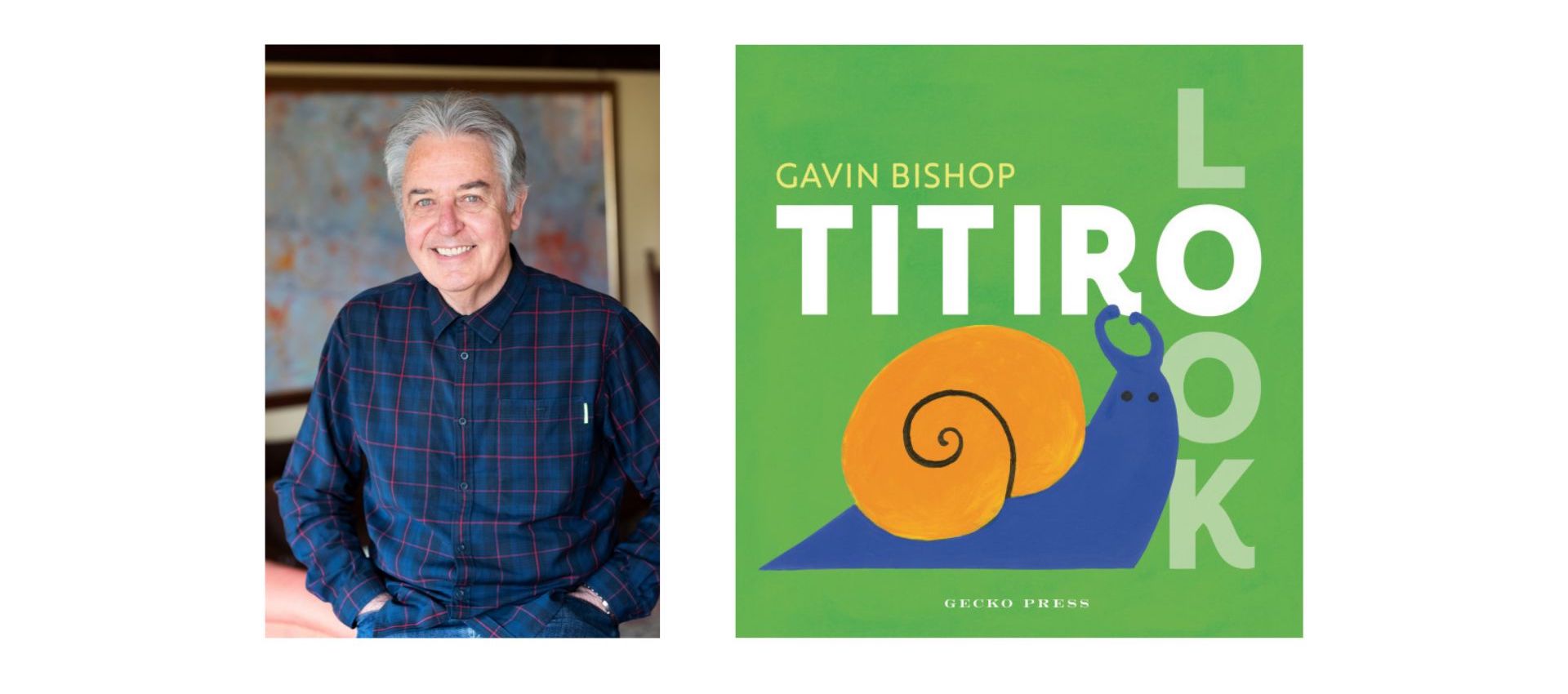
Titiro | Look by Gavin Bishop (Tainui, Ngāti Awa) and translated by Darryn Joseph (Ngāti Maniapoto, Ngāti Rereahu)
MB: This isn’t the kind of picture book you read out loud to a group of children, rather this is one that you pore over one-on-one. Not having a small child to hand, I had to do my poring alone.
I liked the consistency of each double-page spread; a face on the left and something new on the right. The faces are all very different and not all are human so there is both variety and repetition in the words around each face. I also liked that each new object or creature came with its own related verb as the words that could be used to describe the images, so you could incorporate these actions into your exploration of this pukapuka.
I read this one with my two and a half year old and she adores it
The more time I spent with this book, the more I started noticing connections between the illustrations placed next to each other. The page featuring the mokonui (dinosaur) teaches us the word for spiky, and the face on the left has very spiky makawe (hair)! The illustration of a pair of mōhiti (glasses) is placed next to a person wearing glasses. Often one of the colours named on the right will appear in the illustration or the background on the left, giving lots of opportunities to practice new words and point out the features we already know.
CG: I read this one with my two and half year old and she adores it. She has a favourite page (the mokonui!) and picked up, then retained through repetition several new kupu Māori. She was already good with ihu, and taringa, but has added whatu and waha to her regular vocabulary now too. I liked that it moved away and came back to the same kupu at different intervals in the book, almost like it’s challenging you to remember. We also liked being exposed to terms that are less common—taratara (spiky) and kumikumi (whiskers). The colours are bold, and it’s fun for little ones to read with a grown up, or just flip through by themselves.
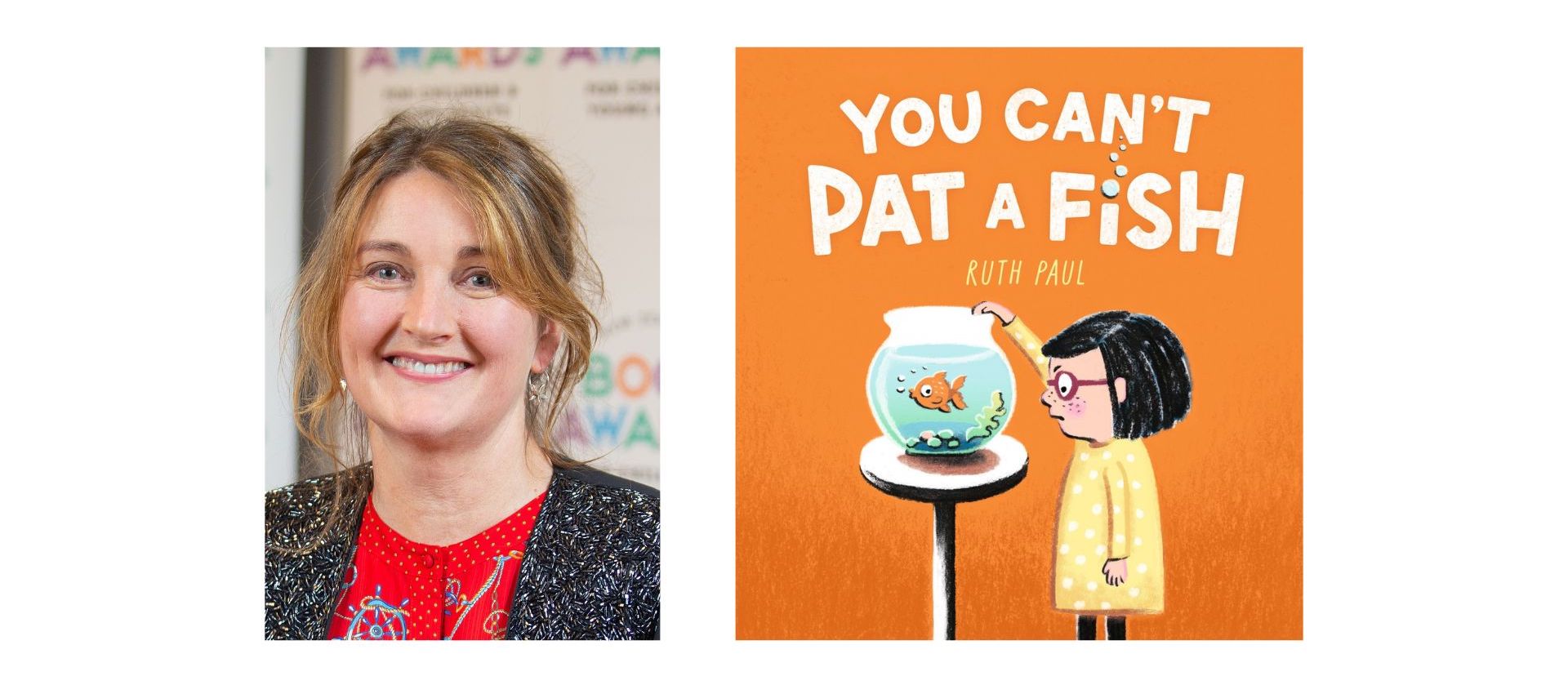
You Can’t Pat a Fish by Ruth Paul
MB: Stomp! by Ruth Paul is one of my favourite storytime books. It’s perfect for getting tamariki up and moving around mimicking the actions of the dinosaurs and examining the pictures to find all the details and see what’s happening to the littlest dinosaur, so I was happy to try out her latest with an audience.
This story came right after our rhyme-time wriggle break. The tamariki looked over all the different animals in the pet store, blew some frog-smooching kisses towards the book, were excited to identify the mammoth, and then laughed out loud at the fishy fart! We made fishy faces, and practiced our swimming, and I believe we all felt very content when our narrator declared her satisfaction with her new pet. Plus I enjoyed the wee cameo of the toy lion (a reference to Lion Guards the Cake, perhaps?).
I had every kid at storytime instantly want to tell me all about every single one of their pets …
This pukapuka was well suited to the age group I was reading to (mainly two to four year olds), and worked very well being read aloud. The story is engaging, funny, a little serious, with an easy read-aloud rhyme scheme. The illustrations are bright and colourful (and maybe occasionally a little mystical and mysterious) and easily able to be seen and interpreted from a bit of a distance, and I loved how expressive the tiny fish-face was!
If I was reading this with a child one-on-one we’d be able to have a lot of fun spending more time with the illustrations and talking about all the different pets and the different activities you could do with them.
CG: I loved the development in this story. From the child who was disappointed that their new pet was ‘just a fish’ to seeing the unique and awesome benefits of a finned friend.
I had every kid at storytime want to tell me all about every single one of their pets, and miraculously (or possibly fictitiously) they all seemed to have fish too! Once we blew past that, we too had fun identifying the different animals and laughing at fish farts. It was a very fun read, perfect for this type of storytime, with not too many words on a page and plenty to look at in the illustrations.
In these books, the finalist authors, illustrators and translators have crafted stories and images that will endure. We are excited to see how each pukapuka comes to occupy its own unique niche in the landscape of literature for tamariki in Aotearoa—whether as cosy bedtime treats, invitations to explore languages and places both familiar and unfamiliar, opportunities to reflect and learn, or any of the other myriad roles a book can play in the life of a young person and a family. You can bet that we’ll all be glued to our screens again on the evening of the August 13, counting down the seconds as we wait for the night’s winners to be revealed.

Claire Guest
Claire is a Children’s and Youth Services Specialist in Wellington’s northern suburb libraries where she organises lots of fun programmes for tamariki. Outside of work, she enjoys spending time with her whānau, quizzing, and playing football.

Merritt Barnett
Merritt is a Children’s and Youth Services Specialist at Wellington City Libraries who likes to make things, think about cats, and convince more people to read Megan Whalen Turner’s Queen’s Thief series.

Stephen Clothier
Stephen is the Children’s and Youth Services Coordinator at Wellington City Libraries. His library-related interests include reading to children in funny voices, teaching robots to dance, and (on occasion) blowing things up.