


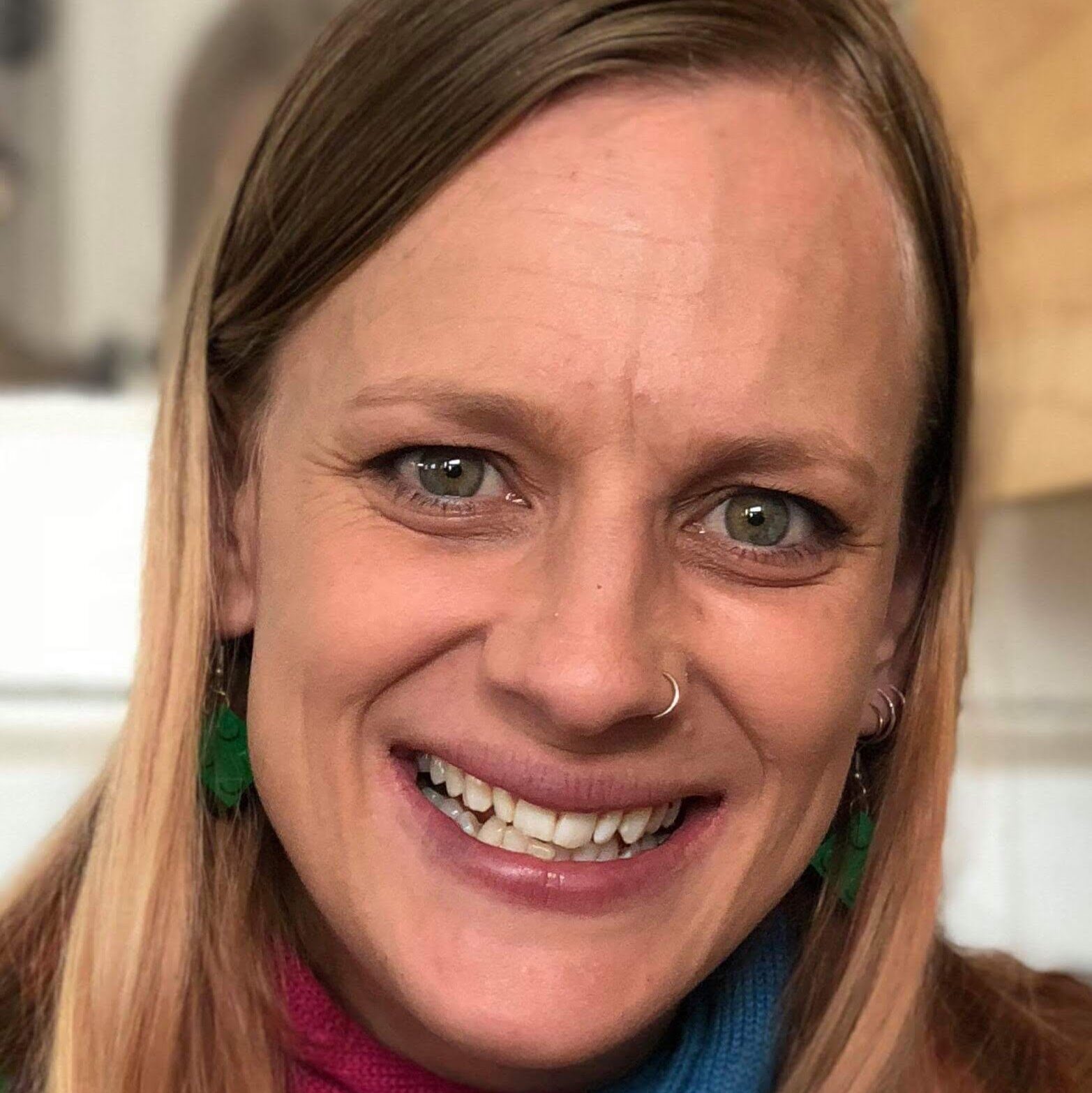
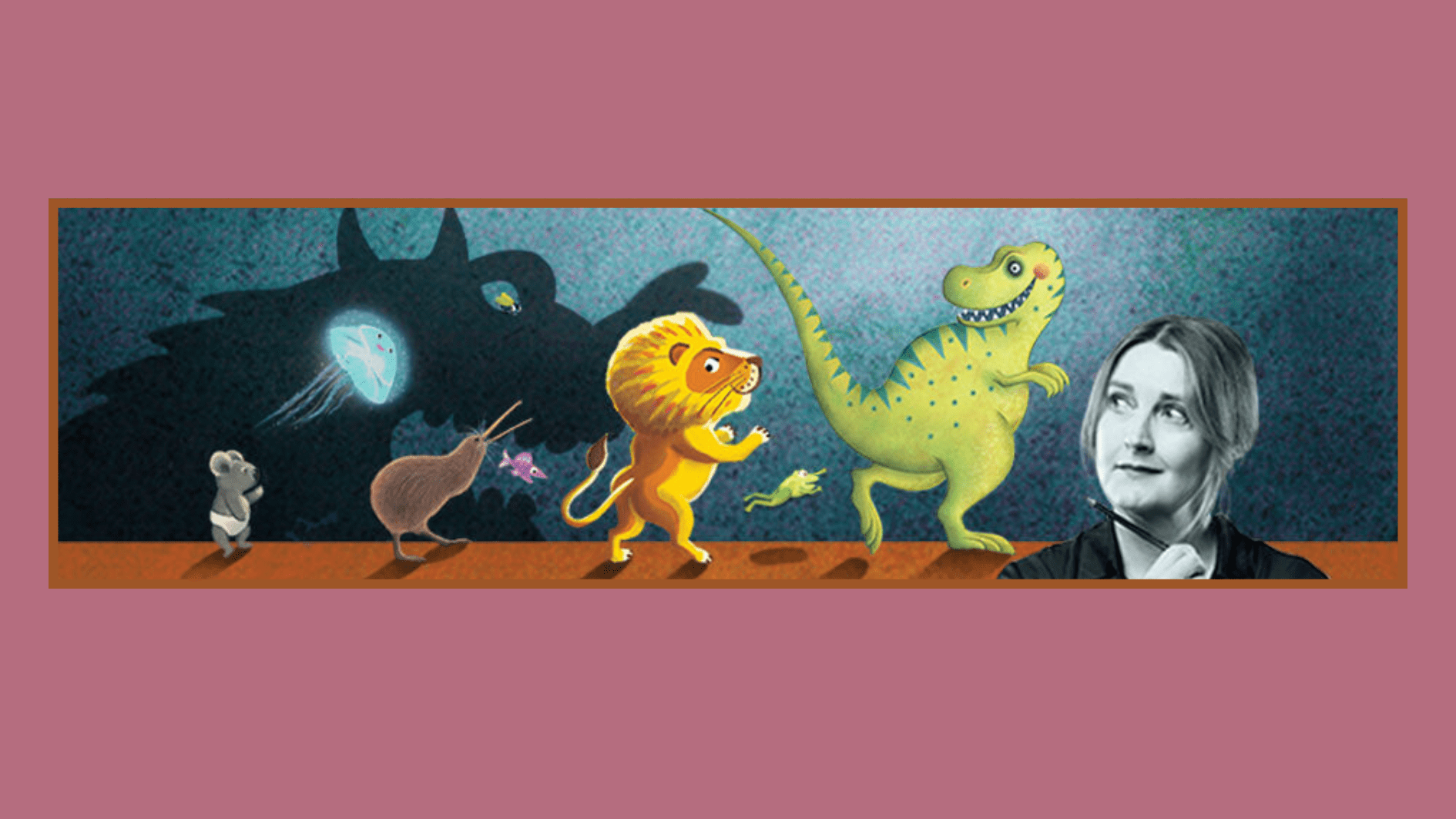
Annelies Judson chats with Fifi Colston and Ruth Paul about their new stage show, Help! A Monster Ate My Story
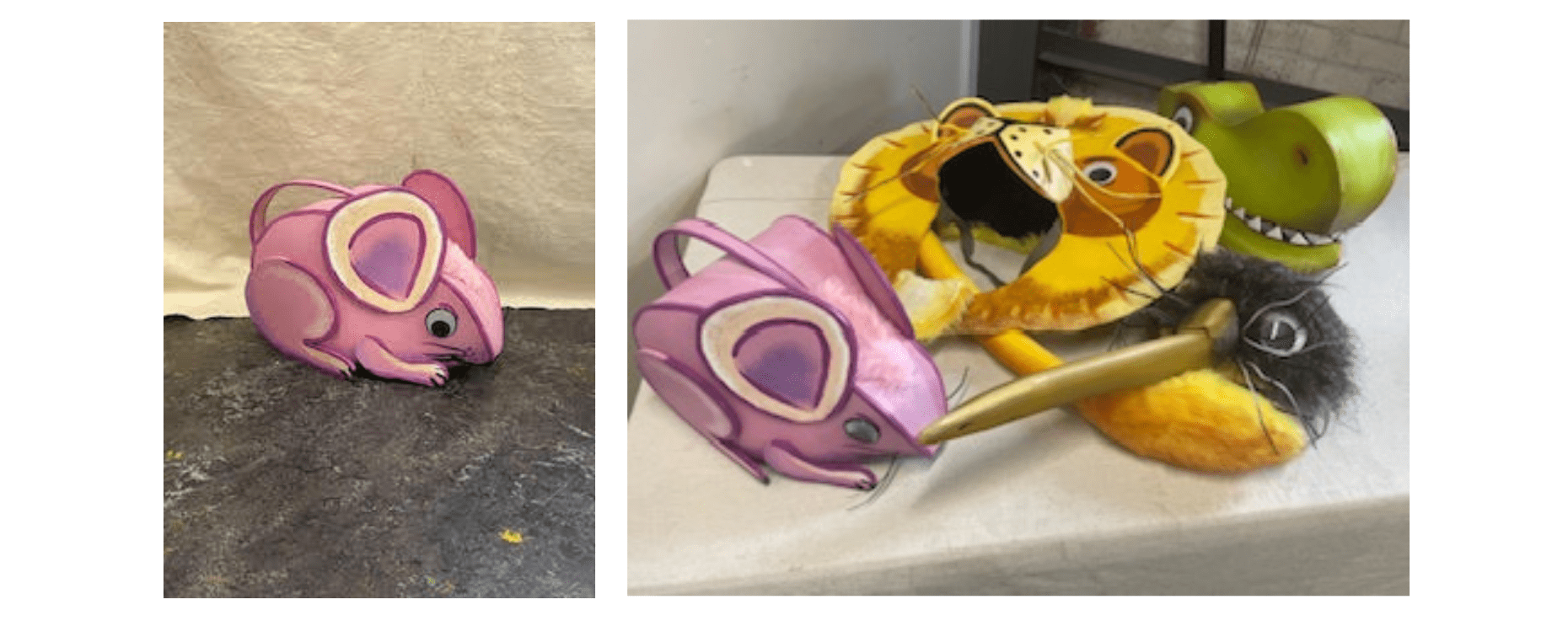
Fifi Colston holds up a pink mouse puppet.
It is a piece of trickery. The puppet was made by Colston—but looks exactly like a mouse from one of Ruth Paul’s books. It is the size of a small rugby ball, and made of EVA foam—but painted to look like a two-dimensional illustration. It sits still in Colston’s hands—but on stage it zips around as if alive, remote-controlled by someone hiding behind the painted scenery.
Colston and Paul are currently preparing for a new stage production, Help! A Monster Ate My Story! The show is about an author/illustrator who decides to get AI to help her with her ideas. What she gets is the Mish Mash Monster, who promptly starts to eat up the other characters. How will she save her stories?
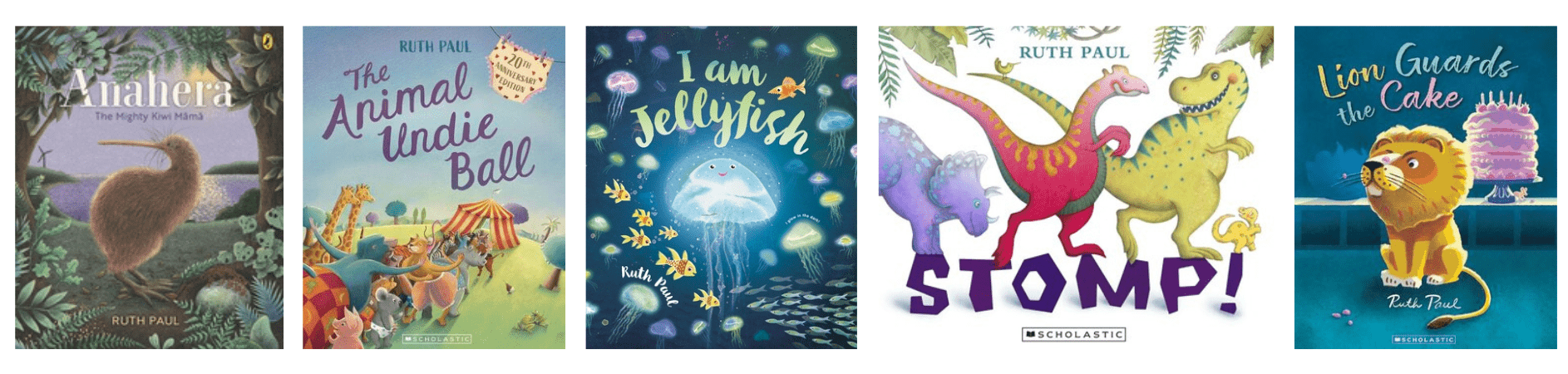
Paul is the author and illustrator of many children’s books, including Lion Guards the Cake, Stomp! andI Am Jellyfish. The show is built around characters from these books, as well as audience suggestions during the performance. Paul and her friend, veteran actor, Peter Hambleton, came up with the idea over a series of coffees. Paul wrote the script and also plays the main character. That wasn’t the original intention, but as the storyline developed, the idea of illustrations coming to life on the stage was the one that stuck. ‘And I thought, well you’d need an actor who could draw,’ Paul says. They decided to make the main character an author/illustrator. ‘Which is why it ended up being me.’
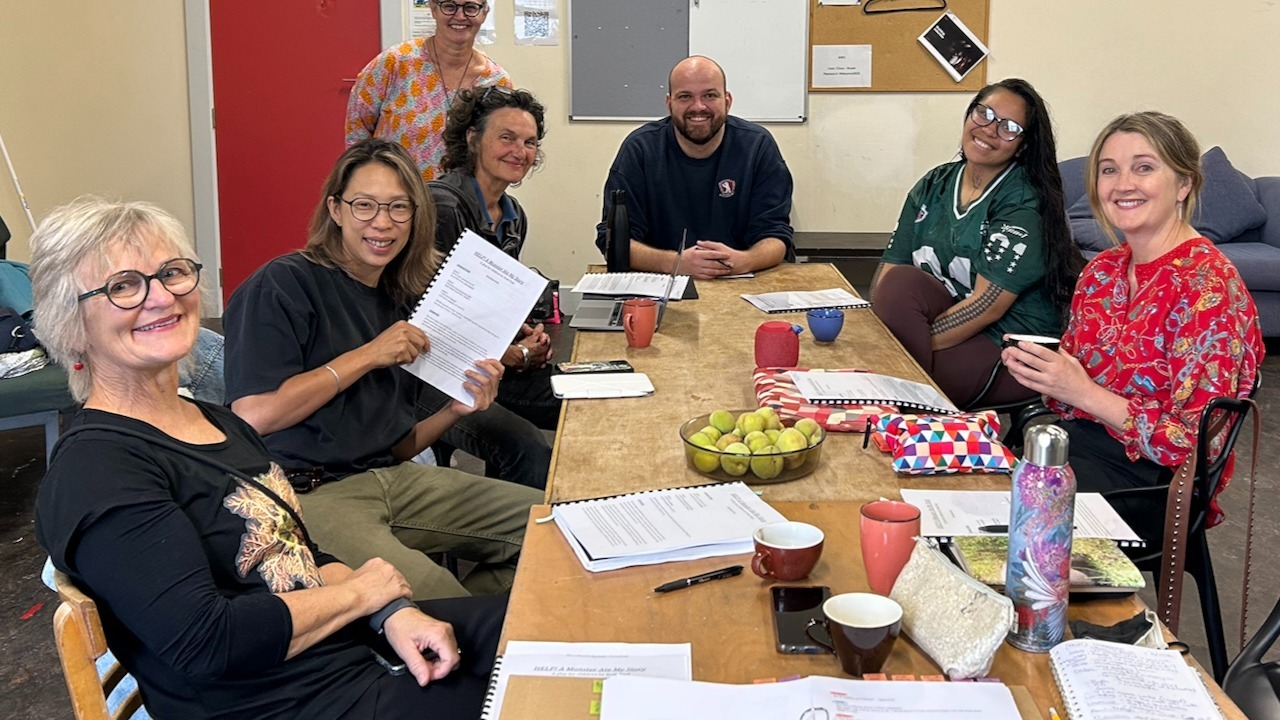
Audience interactivity is merely the final act of collaboration on a project that has come about through a lot of collaborative effort. As well as workshopping the idea with Hambleton, Paul’s friend Emma Robinson is the producer, musician Charlotte Yates created original songs, and the set design and costuming has been done by Colston, Paul’s long-time friend, but first time collaborator (‘Mostly we just collaborate on having coffee,’ Colston jokes). Paul, Colston and Hambleton workshopped the script during the In other words | Kia rerekē te hua Ōtaki residency, during which they were joined by Robinson and Yates.
The residency occurred while Colston was waiting for the results of the 2025 WOW (World of Wearable Art) Award. Her design was the runner up for the Supreme Award last year, and capped a 30-year WOW career in which Colston has been a finalist every single year. She was the perfect person to rise to the challenge of translating paper-and-ink characters for the stage.
‘We wanted everything to look like it had come from a book,’ Paul explains. ‘So first of all we were thinking everything would be two-dimensional and just paper.’
Colston tried going down the paper route, but it wasn’t working. ‘I had a little moment with Ruth where I went, “We can’t make these out of paper. You know, if I have creative licence, we will make these out of EVA foam, which is my staple go-to for costuming. They will be flat. They will look like painted paper. But we can’t use paper technology.”’
I wonder if there is tension here. Colston is herself a picture book illustrator, who is creating costumes to imitate the work of a different picture book illustrator. One person having to deliver another person’s artistic vision is a funny parallel in a show that asks if AI is taking over the creative process.
‘As a costumer, you are trying to deliver [the vision], you’re not imposing your creative stuff all over it,’ Colston tells me. ‘It’s really important that these characters do look like they’ve stepped straight out of Ruth’s books.’ She has spent time studying Paul’s illustrations in detail to try to recreate the exact textures and style.
Of course a single human, recreating the art of another (with permission!) is quite different from generative AI. But unexpectedly, Colston’s take is that AI isn’t so different from this process. As a commercial illustrator, she has regularly been asked to draw in the style of other artists. ‘The copying of styles, without asking the original artist, has been going on for decades and decades.’ The bigger issue, she says, is that nobody in the creative industries is being paid enough, and hasn’t been for years. And AI is a tempting shortcut for people whose work is routinely undervalued.
The bigger issue … is that nobody in the creative industries is being paid enough, and hasn’t been for years. And AI is a tempting shortcut for people whose work is routinely undervalued
However, Colston herself sees AI as a tool. Where in the past, illustrators would ‘slavishly’ look over photographs and pictures to use as reference points, AI can now find or create a reference picture that is exactly what the illustrator needs. This change isn’t dissimilar to how Photoshop and other graphic design tools took away the manual labour of cutting things out with rulers and craft knives. ‘It’s a useful tool to get to the point which you want, quicker,’ she says. She has also used it to help her with the pattern-making calculations for complex costumes. ‘But I would never create an illustration out of AI.’
She acknowledges that there are ethical concerns. But even the idea of AI being trained on creative works without payment to the artists doesn’t inherently sit uncomfortably for her.
Paul’s perspective is slightly different. ‘If [AI] cuts out all the people who produce art, it just learns from itself. And if everybody who used to make art, and get paid for it, and put it online, has left, you’ll just end up with a shitty version of content coming out of AI-driven stuff.’
Then she says the word that, for me, ties all these threads together: authenticity.
Her take is that, as a creative, authenticity is going to become more important. And part of that is what has drawn her to theatre. Theatre, she says, is something you can’t do with AI. In the play, she will be there, physically present with the audience. Not only that, but she will be interacting with them. If it goes wrong, she has to fix it on the spot. It’s authentic in a very tangible way.
Colston shares a similar sentiment. She has seen people in costuming groups on social media criticise the use of AI-generated images for amateur costume design. ‘But what is important is: can you actually make the thing? If you can create that look, how fantastic! Because then that’s a real thing in the world.’
And both agree that the ship has sailed. They share concerns about the environmental impact of AI, but as far as the technology itself, it’s already here to stay.
There could not be a more apt metaphor for the rise of AI than the pink animatronic mouse puppet that is now safely tucked back on Colston’s desk. In the play it starts off as a pencil topper on Paul’s pencil, then becomes a drawing, then morphs into a character on stage. Without the audience realising it, the mouse has become part of the play, interacting with the other animals.
‘But nobody knows it can actually move independently for quite a while,’ Paul says, in what I hope is a literal explanation of the mouse, and not a metaphor for an AI-created doomsday.
So what’s the ultimate message of Help! A Monster Ate My Story! Does the Mish Mash Monster ruin everything? Are all stories all going to be eaten up by a formless Large Language Model?
Paul doesn’t want to give away the ending of the play, other than that the problem of the Mish Mash Monster gets solved.
‘I want to say, it’s changing our world, we’re all up against it,’ Paul says. ‘But I want to say to kids: what you have matters. This thing you want to sing about and talk about and dance about, that’s the thing that’s got to stay. Don’t hand that over.’
Help! A Monster Ate My Story runs at Circa Theatre in Wellington, April 7–19
Tickets are available here

Annelies Judson
Annelies Judson writes book reviews and poetry for children, among other things. Her many loves include cooking, cricket, science and the em-dash. She can be found on Twitter/X and BlueSky @babybookdel, on Instagram @annelies_judson_writer and on Substack, @anneliesjudsonwriter. Her debut picture book Turkey Hurly-Burly, will be released on August 1.